The video embedded below is a speech given by Carlos Martinez at a fundraiser for Cuba, organised by the Portland Global Friendship Group, held on Friday 13 March 2026.
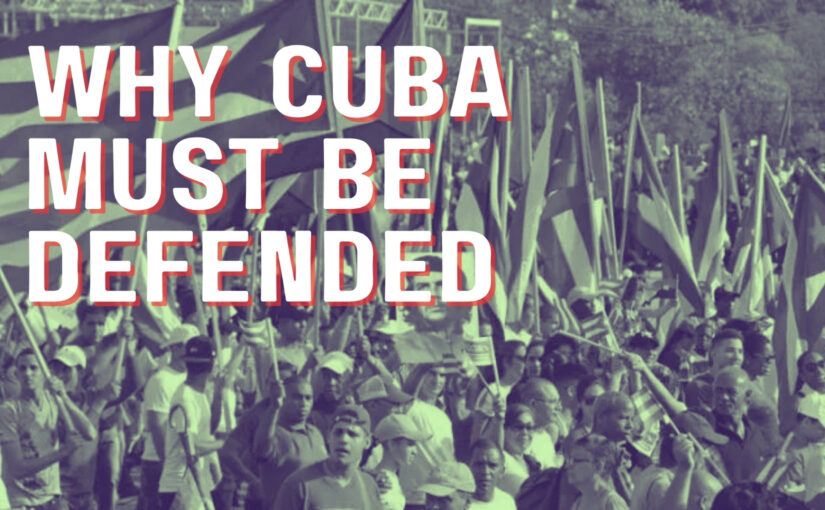
Cuba is facing the gravest crisis in the history of its revolution. The US economic blockade, now in its seventh decade, has been systematically tightened to the point where the island faces blackouts of up to twenty hours a day, acute fuel shortages, and disruption to food supplies.
The blockade has been in place since 1962 – the longest-running embargo in modern history – and has cost Cuba an estimated 2 trillion USD, adjusted to today’s prices. The 1996 Helms-Burton Act extended its reach extraterritorially, penalising companies in third countries for doing business with Cuba in a manner that is flagrantly illegal and unprecedented in modern economic warfare. Cuba’s listing on the US State Sponsors of Terrorism list is designed to choke off Cuba’s access to international banking and finance, making even routine trade almost impossibly difficult.
The immediate trigger for the current energy crisis is the collapse of oil supplies. Cuba had developed a close and mutually beneficial relationship with Venezuela since the start of the Bolivarian Revolution, and Venezuela had been supplying up to 100,000 barrels of oil per day, in exchange for the services of vast numbers of Cuban doctors, teachers and other experts. The Trump administration’s invasion of Venezuela in January and the kidnapping of Nicolás Maduro was motivated by multiple strategic objectives, but strangling Cuba was almost certainly among them. The result has been devastating.
Trump has been explicit about his goal: regime change in Cuba by the end of the year. Marco Rubio – the ideological driving force behind the Cuba policy – has openly threatened the Cuban government. The US is reportedly searching for government insiders willing to cooperate in a soft coup.
Why such a ferocious campaign against a small Caribbean island? The answer is largely ideological. Cuba represents the threat of a good example – a formerly colonised country, ninety miles from the US, that dares to assert that another world is possible: to control its own resources, follow its own development model, and align itself with the forces of progress globally. The US response is designed to demonstrate what happens to countries that make that choice.
Yet Cuba’s achievements under sixty-seven years of revolution, blockade and constant pressure are extraordinary. Literacy has risen from 70 percent at the time of the revolution to 99.8 percent – higher than both Britain and the US. Healthcare is free, universal and world-class: Cuba has one doctor for every 220 people, a life expectancy of 79 years, and an infant mortality rate of 4.83 per thousand live births. Cuba developed the world’s first meningitis B vaccine, and during the Covid pandemic produced its own vaccines indigenously, despite the blockade, achieving mass vaccination ahead of far wealthier nations.
The 2022 Family Code, developed through an extensive popular consultation process and passed by referendum with a 74 percent turnout, is one of the most progressive family law frameworks in the world. Women hold 43 percent of parliamentary seats. The World Wildlife Federation has declared Cuba the only country on earth to have achieved sustainable development by the dual measure of human development and environmental sustainability.
Cuba’s internationalism is perhaps its most extraordinary dimension. Over 400,000 Cuban medical personnel have served in 164 countries. Cuba deployed 375,000 troops to Angola between 1975 and 1991, playing a decisive role in protecting Angola’s independence, defeating South African apartheid forces and helping liberate Namibia — prompting Nelson Mandela to describe Cuba’s contribution as “unparalleled in African history”.
Cuba is now responding to the energy siege not with surrender but with transformation. Solar power has tripled in a single year, from 5.8 percent to over 20 percent of electricity generation. Forty-nine new solar parks have been connected to the grid. China has been Cuba’s most important partner in this effort: 92 solar parks are being built with Chinese equipment, financing and expertise, with a combined capacity matching Cuba’s entire current fossil fuel output.
But Cuba urgently needs international solidarity. As Fidel Castro said in 1994, “we understand what it would mean for all the progressive forces, for all the revolutionary forces, for all the lovers of peace and justice in the world, if the United States succeeded in crushing the Cuban Revolution”. The defeat of the Cuban Revolution would embolden imperial aggression everywhere – a signal that no country, however principled, can defy global capital and survive.