Sunlight against the blockade: China and Cuba’s solar revolution

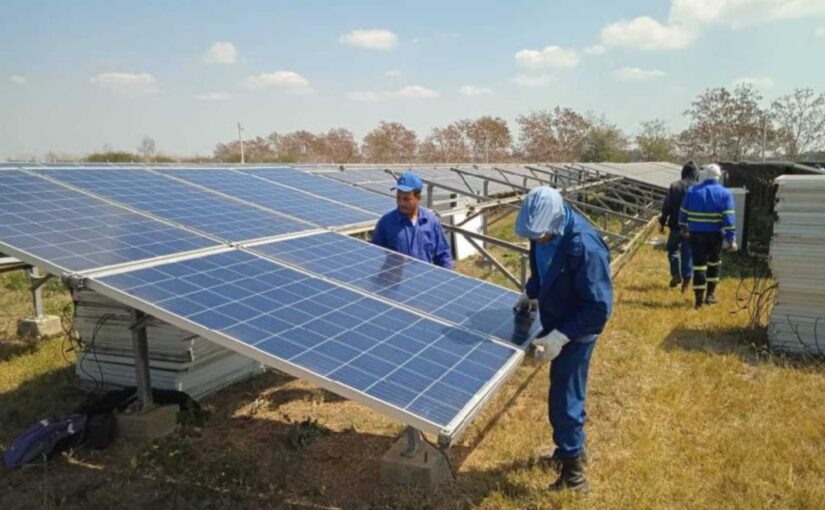
China has delivered a second consignment of 5,000 photovoltaic systems to Cuba, destined for rural communities, health centres, day nurseries and bank branches – the latest instalment in what has become one of the fastest energy transitions anywhere in the world. With Chinese equipment, finance and technical support, Cuba has installed around 1,000 MW of new solar capacity in two years, with 92 medium-sized parks due for completion by 2028, while Chinese solar exports to the island have risen from $3 million to $117 million in as many years. All of this is taking place against a grid pushed towards collapse by Washington’s energy siege, with available capacity at times barely a third of peak demand.

The following article by Carlos Martinez sets out why this amounts to considerably more than an infrastructure project: oil tankers can be intercepted, suppliers threatened and banks sanctioned, but sunlight cannot be blockaded.

This article was first published by Friends of Socialist China.

China has delivered a second consignment of 5,000 photovoltaic systems to Cuba, destined for rural communities, health centres, day nurseries and bank branches. Receiving them, President Miguel Díaz-Canel said Cuba “deeply appreciates this gesture by the Chinese people and government, which adds to the efforts Cuba is making to change its energy mix, amid the genocidal blockade”.

The donation is a small part of what has become one of the fastest energy transitions anywhere in the world. Over the past two years, with Chinese equipment, financing and technical support, Cuba has installed around 1,000 MW of new photovoltaic capacity. This forms the first half of a programme to construct 92 medium-sized parks, each generating approximately 21.8 MW, with a combined capacity approaching 2,000 MW by 2028. Alongside this credit-financed programme, China is donating a further 120 MW through a network of smaller parks. Solar supplied roughly 10 percent of Cuba’s electricity over the course of 2025; during daylight hours its contribution is now considerably higher, at times approaching half of national generation around midday.

The scale of this expanding cooperation can be read in the trade figures. Chinese exports of solar equipment to Cuba came to $117 million in 2025, against just $3 million two years earlier. Havana furthermore has scrapped tariffs on photovoltaic systems, solar water heaters, wind turbines, biodigesters and renewable-powered air conditioning.

Continue reading Sunlight against the blockade: China and Cuba’s solar revolution

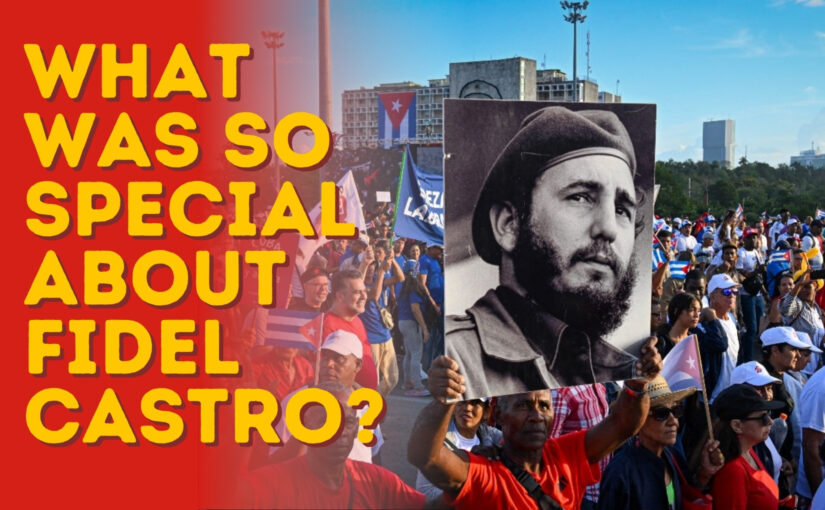
What was so special about Fidel Castro?

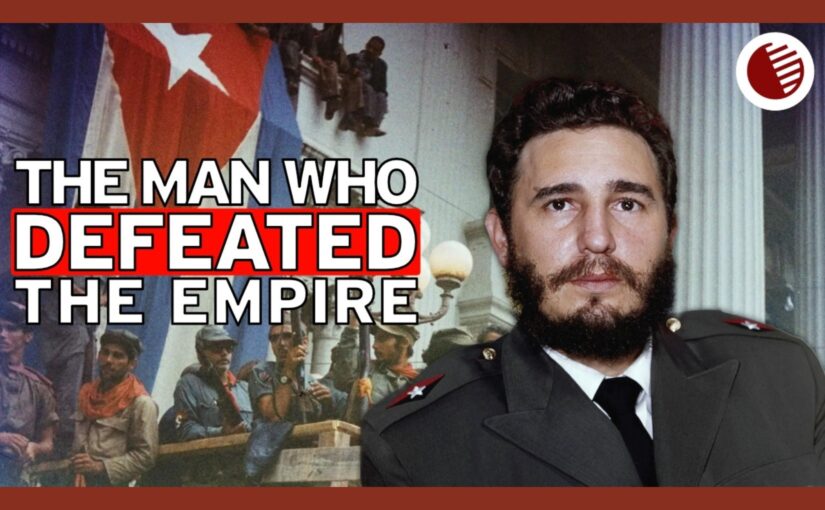
Fidel Castro was born on 13 August 1926. On the centenary of his birth, Carlos Martinez asks: what was actually so special about Fidel? Not the myth, but what he concretely did and understood that so few others did.

This video looks at four aspects: the unswerving revolutionary, who saw the possibility of overthrowing a US puppet dictatorship, defeated a CIA invasion in 72 hours, and then refused to follow Gorbachev when 85 percent of Cuba’s trade vanished overnight. The principled and undogmatic Marxist, who insisted that Marxism could not be conceived of as a church with its Rome and its Pope, who backed Allende’s peaceful road and the Bolivarian governments alike, and whose 1993 assessment of Chinese socialism put him decades ahead of most of the Western left. The consummate internationalist, who sent 375,000 troops to help defeat apartheid South Africa in Angola and took nothing in return, and whose “army of white coats” has now put more than 600,000 Cuban health workers into 165 countries. And the man of the people – the literacy campaign, the confrontation with racism, the early warning at Rio in 1992.

Then the video turns to why this centenary matters so urgently. Cuba is facing the gravest threat since 1959: a Trump administration reportedly working to bring the government down by the end of the year, a fuel blockade that has produced six national grid collapses in 2026 alone, a reported plan for a naval blockade, and an assault on the Cuban medical missions. Honouring Fidel means giving Cuba our firm solidarity.

Sources and further reading:

To honour Fidel Castro means to continue his work of fighting imperialism and building socialism

Fidel Castro on Chinese socialism (1993) – the full text of the remarks quoted in this video

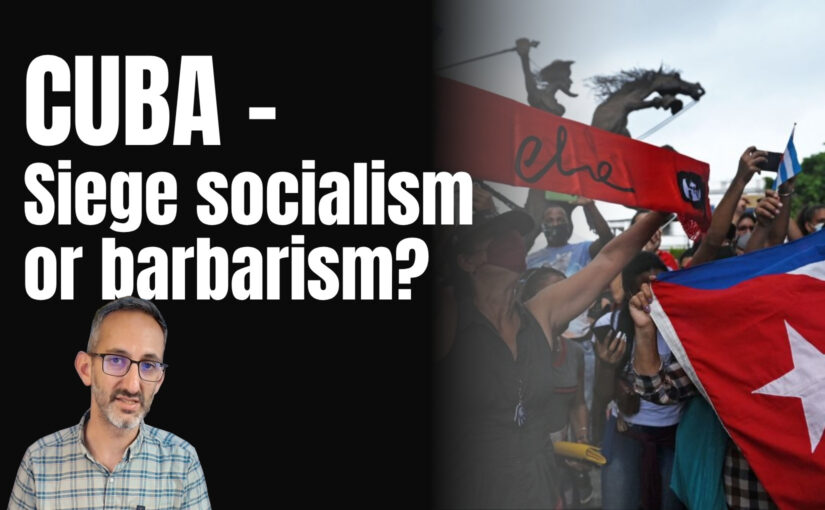
Cuba: siege socialism or barbarism – earlier video

Cuba Solidarity Campaign

Cuba is not a failed state – it is a besieged state (Morning Star)

Transcript

Hello and welcome.

This Thursday, 13 August, Fidel Castro would have been a hundred years old. Cuba has designated this the Year of the Centenary of the Commander-in-Chief Fidel Castro Ruz, and there are events taking place all over the world to mark the event.

So, what was so special about Fidel? What, concretely, did he do and understand that so few others did?

The question matters particularly now, when Cuba faces its gravest threat since 1959.

When Engels stood at Marx’s graveside in Highgate Cemetery in 1883, he said that Marx was “before all else a revolutionist”, whose real mission in life was to contribute to the overthrow of capitalist society and to the liberation of the modern proletariat. And that description fits Fidel just about as well as it has ever fitted anybody.

What he attempted was extraordinary. In the 1950s, Cuba was ninety miles from the United States — economically dominated by it, politically supervised by it, culturally saturated by it, and ruled by Washington’s man, Fulgencio Batista. This was the height of McCarthyism. There was no model of revolution to copy. There was no collapsing empire leaving a power vacuum, no Red Army arriving over the border.

Cuba’s existing communist party, the Popular Socialist Party, was a serious organisation with real roots in the working class, but it didn’t believe that the moment had come. Its leader, Blas Roca, was honest about this afterwards. For a long time, he admitted, the party “failed to take any practical steps” towards armed struggle, because it assumed that the struggles it was leading would culminate in insurrection more or less spontaneously. Fidel recognised the potentially revolutionary situation and then did the practical work: preparing, training and assembling people who were prepared to fight.

Continue reading What was so special about Fidel Castro?

To wage war on Cuba’s doctors is to admit you have nothing to offer the world

Cuba’s medical missions are the clearest proof of what a small socialist country can offer humanity – which is precisely why the Trump administration is working to destroy them.

This article by Carlos Martinez was first published on the Alborada Substack.

The Trump administration has found a new target in its long war on Cuba: the island’s doctors. As the Wall Street Journal reports, Washington is now moving to destroy Cuba’s overseas medical missions – one of its last remaining sources of hard currency – having already blocked its fuel shipments, sanctioned and indicted its officials, and choked off remittances. Marco Rubio has toured the Caribbean threatening visa bans against any official who keeps employing Cuban medics, denouncing the programme – bizarrely – as “forced labour” and “state-sponsored human-trafficking brigades”.

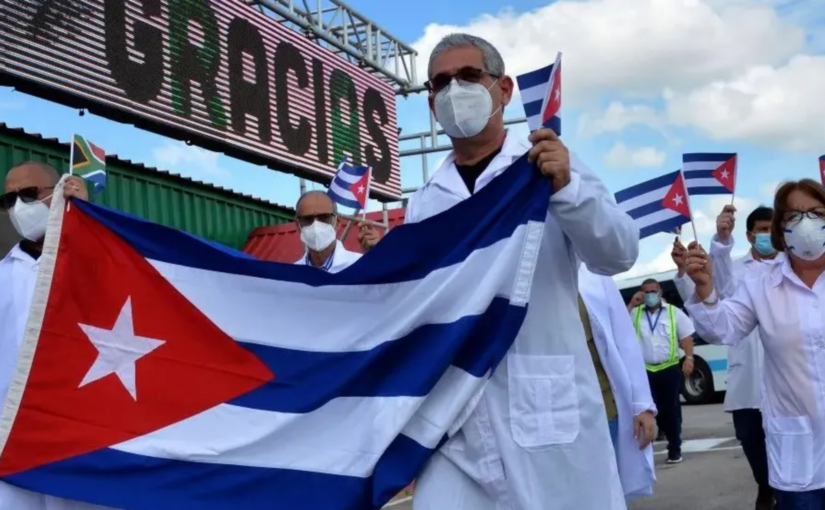
Since 1963, when the first brigade arrived in newly independent Algeria, Cuba has sent what Fidel Castro called an “army of white coats” to heal the poor of the world. Over the course of the revolution, more than 400,000 Cuban health workers have served in 164 countries. Some 24,000 currently serve across more than 50 countries, from tiny Caribbean islands to the rural villages of southern Italy. They staff the clinics no one else will.

Cuban doctors who participated in internationalist medical missions. Photo: MINSAP Cuba

The record of these missions is without parallel. Operation Milagro (Miracle), launched with Venezuela in 2004, has restored sight to millions of people across Latin America and the Caribbean – in Bolivia alone, Cuban doctors carried out three million ophthalmological consultations and nearly three-quarters of a million eye operations.

The Latin American School of Medicine in Havana has trained tens of thousands of doctors from the Global South free of charge, on condition that they return to serve their communities. The Henry Reeve Brigade – founded in 2005 and named after a US citizen who fought for Cuban independence – confronted Ebola in West Africa and Covid-19 in Italy, and has repeatedly been nominated for the Nobel Peace Prize. In Jamaica, over the last three decades alone, Cuban medics have treated more than eight million patients and saved over 90,000 lives.

This is what Washington is working to dismantle. Under threat of sanctions and visa bans, Jamaica and Guyana have ended partnerships of more than 50 years’ standing; Guatemala and the Bahamas are following suit; Honduras sent home more than 150 Cuban medical workers, whose departing staff were given a tearful ovation by the residents they had served in the country’s ophthalmology clinics.

Not everyone is submitting. St Lucia’s Prime Minister Philip J Pierre said plainly that “our medical system would basically collapse without the Cuban doctors”. Barbados Prime Minister Mia Mottley noted last year that “we could not get through the pandemic without the Cuban nurses and the Cuban doctors”. And when the US leaned on St Vincent and the Grenadines, Prime Minister Ralph Gonsalves responded: “I will prefer to lose my visa than to have 60 poor and working people die”.

That is the choice the US is forcing on the region: get rid of the Cuban doctors, or be punished. The world’s richest country would rather the poor of the Global South go blind and die than tolerate Cuban solidarity.

Why? Partly for the obvious reason: the missions are Cuba’s largest export, generating some $5.3 billion in 2024 – half of all its foreign earnings. Ending them is simply the latest chapter in a strategy the State Department set out in writing in 1960: to deny Cuba money and supplies, “to decrease monetary and real wages, to bring about hunger, desperation and overthrow of government”. More than six decades of blockade have followed that memo faithfully, at a cumulative cost to Cuba of over $160 billion, equivalent to around two trillion dollars in today’s money.

But the deeper reason is fear. The medical missions are the clearest proof of what a small socialist country can offer humanity. That is the real target. Not “trafficking”, but the threat of a good example: a blockaded island of 11 million people – poor, besieged, endlessly slandered – that sends doctors where empires send gunboats.

To wage war on Cuba’s doctors is to admit you have nothing to offer the world. Solidarity with Cuba has never been more urgent. ¡Venceremos!

Cuba’s economic reforms and the prospects for socialist renewal

This month Cuba approved the most far-reaching changes to its economic model in more than 60 years. In this article, Carlos Martinez argues that – far from the blockade finally breaking the Revolution – the reforms are best understood as a defence of socialism under siege, following the strategic logic China has pursued since 1978: the controlled use of markets and foreign investment to develop the productive forces while the Communist Party retains political power and public ownership of the commanding heights.

This article first appeared on Friends of Socialist China. A version of the article, translated into Portuguese, can be found on Brasil de Fato.

This month Cuba announced the most far-reaching changes to its economic model in more than 60 years. Approved by an Extraordinary Plenum of the Central Committee of the Communist Party of Cuba and passed unanimously by the National Assembly, the programme runs to 23 strategic axes and 176 concrete measures. Predictably, much of the Western press – along with a substantial section of the Western left – has rushed to interpret it as the moment the blockade finally broke the Revolution, as proof that Havana has at last been forced onto the capitalist road.

Such a reading misunderstands both the content of the measures and the history that has produced them. The reforms are best understood as Cuba’s attempt to do what several other besieged socialist states have had to do before it: to defend itself by developing its productive forces, on its own terms, but under conditions not of its choosing. As the Cuba specialist Isaac Saney puts it, the measures, “far from representing a retreat”, in fact constitute “a strategic effort to preserve and deepen the social gains of the Revolution in the face of relentless external pressure and unprecedented economic challenges”.

For those that have followed China’s development, the framework on display in Havana is immediately recognisable. Cuba is reaching, under enormous duress, for the strategic logic that has guided the Chinese Revolution since 1978: the controlled use of markets and foreign investment to develop the productive forces, while the Communist Party retains political power and public ownership of the commanding heights. It is also reaching for the support of its longstanding friends. China and Vietnam have been Cuba’s most consequential partners in weathering the present siege, and the deepening relationship between their parties forms an essential part of the backdrop to these reforms.

What the reforms actually do

Under the new package, Cuba will scrap the long-standing requirement that foreign investors partner with a state-owned company. It will authorise large private firms, permit private banks to operate, allow private real estate development, and open the door to domestic and foreign investors acquiring stakes in state enterprises, some of which are to be converted into joint-stock companies.

Cubans living abroad will be actively encouraged to invest, donate, import technology and build businesses at home. State-owned enterprises – which remain the principal pillar of the economy – will be granted far greater autonomy over investment, hiring, pricing and financial management, while municipal governments will gain expanded powers to pursue local development. Wage ceilings that have motivated significant numbers of skilled professionals to leave the country are to be lifted.

Continue reading Cuba’s economic reforms and the prospects for socialist renewal

Siege socialism or barbarism: why we must stand with Cuba

Carlos Martinez’s article on Cuba, siege socialism and the case for international solidarity, originally published in the Morning Star on 4 June 2026.

A few weeks ago, Donald Trump told reporters that he expects the Cuban government to be gone by the end of the year. He called Cuba “a failed country” and added: “Other presidents have looked at this for 50, 60 years, doing something. And it looks like I’ll be the one that does it.”

Secretary of State Marco Rubio has declared that “Cuba has consistently posed a threat to the national security of the United States” — a standard preamble before regime-change operations.

The Department of Justice has unsealed a federal indictment against 95-year-old Raúl Castro for events that took place 30 years ago, and in which Cuba acted in a completely legal and just manner.

Meanwhile, the USS Nimitz carrier strike group has entered Caribbean waters. And in the Caribbean and Pacific, the US Navy has over the last few months killed almost 200 people and destroyed 57 vessels in what are, by any reasonable definition, extrajudicial executions.

It is clear that the US is escalating its economic, diplomatic and military pressure on Cuba to unprecedented levels, with a view to getting rid of the Cuban Revolution once and for all.

What alternative future does Washington propose for Cuba?

It helps here to recover a concept developed by the late Marxist historian Michael Parenti.

In his 1997 book Blackshirts and Reds, Parenti pointed out that for the entire history of actually-existing socialism — in the Soviet Union, in China, in Vietnam, in Cuba, in Korea and elsewhere — there has never been a single example of a socialist project that’s been allowed to develop in peace, to pursue its own development model.

Every socialist state has existed in a context of imperialist encirclement; socialist states have faced invasion, sabotage, blockade, embargo, assassination attempts, sanctions, coup attempts, proxy wars.

Parenti argued that you cannot judge any of these societies without taking that into account.

To compare really-existing socialism with an imaginary, abstract socialism that would have been allowed to develop in peace is intellectually dishonest. The socialism that actually exists is, in his phrase, siege socialism. It is shaped and distorted by the conditions under which it has been built.

Cuba today is the canonical example of siege socialism. It’s very literally under siege. The US blockade — 64 years old and counting — is now the most comprehensive economic siege in modern history.

Over the last couple of years, fuel imports have been cut by 90 per cent. Parts of the country are now experiencing blackouts of up to 20 hours a day. Hospitals are operating on emergency generators.

Medicines, basic foodstuffs, replacement parts, fertilisers — all are being squeezed by a sanctions regime purposely designed to bring about hunger and poverty, and to generate discontent against the government.

And yet, under that siege, socialism continues to deliver for the Cuban people. Cuba has a life expectancy of 78 years and an infant mortality rate of around five per thousand — both better than the US. A literacy rate above 99 per cent, and an education system that produces doctors in such abundance that Cuba exports more medical personnel worldwide than the WHO, UNICEF and Médecins Sans Frontières combined.

When hurricanes hit the Caribbean, Cuba invariably experiences the lowest death toll in the region: last year Hurricane Oscar killed seven people in Cuba and 235 in Haiti, despite hitting Cuba first and harder. This is what a basic orientation towards the needs of the people, rather than profit, can do.

The standard Washington framing for a post-socialist Cuba is something along the lines of a thriving market democracy, a haven for tourists and a consumer utopia where people cheerily drive their Teslas to the nearest polling station to vote for one of several neoliberal pro-US parties. But there is absolutely no historical evidence that supports the viability of that vision.

It would be more instructive to compare Cuba with Haiti, which has been subjected to non-stop US intervention and interference for over a century and is today, by pretty much every metric, a humanitarian catastrophe.

Or to compare Cuba with the Dominican Republic, with Guatemala, with El Salvador — countries that suffered the kind of regime change Trump is now threatening Cuba with, and that have spent the decades since exporting their populations northwards because life at home became unliveable.

We can also compare Cuba today with pre-revolutionary Cuba — the Cuba of Fulgencio Batista, where Havana was a mafia gambling capital and a brothel for North American tourists, where illiteracy and child malnutrition were endemic, where much of the country was racially segregated, where the US Marines came and went as they pleased and the presidents were chosen in Washington.

That is the Cuba the US is trying to bring back. A playground for the rich, a colony in all but name. That is what Trump’s talking about when he says he wants the Castro regime gone.

So Cuban socialism is very much worth saving. Can it be saved? It can. The Cuban people are extraordinarily resilient and committed to defending their sovereignty and their revolution. Furthermore, Cuba is not alone.

China is now Cuba’s largest energy and infrastructure partner, and a major source of food and medicine. This week, Chinese and Cuban officials met in Beijing for talks on agricultural co-operation, framed around a “Cuba-China community of shared future.”

The same day, the first 15,000 tonnes of a 60,000-tonne Chinese rice donation arrived in Havana — what Foreign Minister Bruno Rodríguez called “a new display of solidarity and brotherhood.”

On top of that, China is financing 92 solar parks across the island by 2028, projected to cover roughly half of Cuba’s daytime electricity demand.

Once Cuba generates its own power from the sun, the central weapon of the energy blockade begins to crumble.

China’s diplomatic backing is also worthy of note. Chinese Foreign Ministry spokesperson Mao Ning declared this week that “China firmly supports Cuba in safeguarding its sovereignty, security and development interests” — the second such statement in a week.

Meanwhile Russia, Vietnam, Iran, Venezuela, Nicaragua, Mexico and Brazil are all providing practical solidarity to Cuba, along with campaign groups such as Britain’s Cuba Solidarity Campaign. If Cuba can hold the line through this period, the multipolar world taking shape on the other side will be a far more hospitable environment for projects like the Cuban Revolution.

That is why Cuba must survive the present. The alternative has nothing to do with freedom or democracy.

It is the Miami exile establishment, the return of the old oligarchy, the carve-up of every public asset by foreign capital. We have seen what that looks like in Yeltsin’s Russia, or in Libya after Nato’s regime change war.

Rosa Luxemburg coined the phrase “socialism or barbarism” in 1916, in the middle of the first world war, as a general statement about humanity’s choices. In the Caribbean in 2026, it is a concrete question on the table.

Cuba has stood for 67 years as a beacon of hope for the oppressed and exploited around the world. It has been a source of inspiration for generations of activists, a symbol of resistance against imperialism, a model of what a different kind of society can look like.

The whole world must stand with Cuba now, in its hour of need. We must demand an end to the blockade, an end to sanctions, an end to threats. We must support Cuba’s right to self-determination, to sovereignty, and to development on its own terms.
Cuba: siege socialism or barbarism

The US president has said he expects the Cuban government to be gone “by the end of the year”. His administration has indicted Raúl Castro, killed nearly 200 people in extrajudicial strikes in the Caribbean and Pacific, and tightened a blockade now in its 64th year. So it’s worth asking, seriously: what is the actual alternative to socialist Cuba that’s being proposed by the imperialists?

In this video, Carlos Martinez takes up the late Michael Parenti’s concept of “siege socialism” from his 1997 book Blackshirts and Reds, and argues that Cuba is the canonical example of it today. The video looks at what Cuba has held onto under siege – life expectancy higher than the US, infant mortality lower than the US, world-leading literacy and medical training – and compares it with the countries in the region that took the path Washington wanted them to take, such as Haiti, the Dominican Republic, and pre-revolutionary Cuba itself.

Carlos also looks at why the trajectory may be turning: Chinese investment in 92 solar parks, the rise of multipolarity, and the prospect of energy sovereignty as the way out of the siege.

Rosa Luxemburg’s “socialism or barbarism” was a philosophical statement in 1916. In the Caribbean in 2026, it is a concrete choice.

Note an article version of the video has been published in the Morning Star.

Sources and further reading:

Michael Parenti, Blackshirts and Reds (1997)

Cuban government statement on the indictment of Raúl Castro

Cuba Solidarity Campaign

China stands with Cuba against illegal indictment of Raúl Castro

Cuba is not a failed state – it is a besieged state

Transcript

Hello and welcome.

A few weeks ago, Donald Trump told reporters that he expects the Cuban government to be gone by the end of this year. He called Cuba a failed country and added, “Other presidents have looked at this for 50, 60 years doing something and it looks like I’ll be the one that does it.” His Secretary of State, Marco Rubio – more commonly referred to as Narco Rubio – has declared that Cuba has consistently posed a threat to the national security of the United States, which is essentially the standard preamble for regime change operations.

Last week, the Department of Justice unsealed a federal indictment against Raúl Castro for events that took place 30 years ago and in which Cuba acted in a completely just, completely legal manner.

Continue reading Cuba: siege socialism or barbarism

China and Cuba’s solar revolution: solidarity in practice

As Donald Trump tightens his energy stranglehold on Cuba – severing oil supplies, threatening countries that dare to help, and following the Kissinger playbook of “making the economy scream” – a remarkable story of socialist solidarity is unfolding.

Writing in the Morning Star, Carlos Martinez documents how China has stepped into the breach, assisting Cuba with its energy sovereignty and its green transition. Chinese solar exports to Cuba have rocketed from $5 million in 2023 to $117 million in 2025. Beijing has committed to building 92 solar parks on the island by 2028, with a combined capacity equivalent to Cuba’s entire current fossil fuel generation. Already, Cuba’s share of solar power has risen from 5.8 percent to over 20 percent in a single year – a pace of transition that energy analysts describe as one of the fastest ever achieved by a developing nation.

But as this article shows, China’s solidarity extends far beyond megawatts and megaprojects. Ten thousand photovoltaic systems have been donated for rural homes, maternity wards and health clinics. Five thousand solar kits installed across 168 municipalities are keeping medicines refrigerated and families powered through the blackouts. President Xi Jinping personally approved $80 million in emergency aid for electrical equipment. Chinese Ambassador Hua Xin has pledged “firm support under all circumstances.”

This, Carlos argues, is what South-South cooperation looks like in practice: technology, financing and humanitarian assistance with no conditionalities, no structural adjustment, no strings attached. Fidel Castro said in 2004 that China had become “the most promising hope and the best example for all Third World countries.” Cuba’s solar revolution suggests his assessment has only become more prescient.

When the lights go out in Havana — as they have done for up to 20 hours a day in the worst months of Cuba’s current energy crisis — the causes are not difficult to identify.

The United States’ economic blockade, in place since 1962 and systematically tightened under successive administrations, has cost Cuba an estimated $160 billion ($2 trillion in current prices, which is equivalent to around 20 years of Cuba’s annual GDP).

The latest escalation of this cruel and illegal blockade has involved a full-scale energy embargo, with the US attempting to completely cut off Cuba’s access to oil.

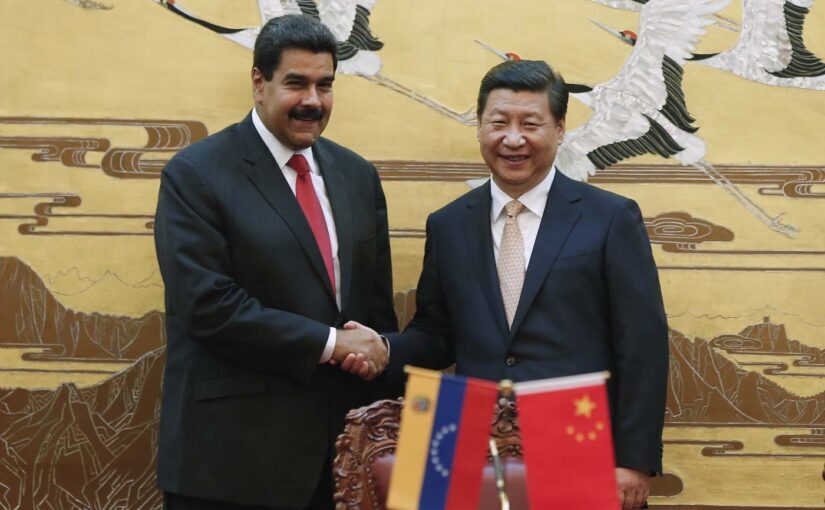
The kidnapping of Venezuelan President Nicolas Maduro three months ago resulted in the severing of by far Cuba’s most important energy supplier.

Trump’s tariff threats then forced Mexico to cancel emergency oil shipments.
The result has been blackouts, fuel shortages and severe disruption to daily life across the island. The Trump regime is following the Kissinger playbook of “making the economy scream” in order to force regime change.

And life is unquestionably being made difficult. As a Cuban hairdresser told Medea Benjamin of CodePink in February: “You can’t imagine how it touches every part of our lives. With no gasoline, buses don’t run, so we can’t get to work. We have electricity only three to six hours a day. There’s no gas for cooking, so we’re burning wood and charcoal in our apartments. It’s like going back 100 years.”

Thankfully, at the end of March, a Russian tanker carrying an estimated 730,000 barrels of crude oil docked in Havana, providing some urgently needed relief. But Cuba’s energy import situation continues to be highly precarious and uncertain.

Nobody can blockade the sun 

The Cuban people’s response to this siege has not been surrender. It has been transformation — and at the heart of that transformation is a remarkable programme of solar energy development, driven by one of the most significant acts of international solidarity in the history of the global green transition.

China’s support for the Cuban renewable energy programme has accelerated dramatically in recent years. Chinese solar exports to Cuba rose from $5 million in 2023 to $117m in 2025. A report in the Financial Times on April 6 notes that “thanks to Chinese technology, the Caribbean island has 34 solar parks in operation with a capacity of almost 1.2 gigawatts (GW), a 350 per cent increase on 2024, enabling Cuba to more than quadruple its proportion of solar-powered generation by the end of last year.”

Beijing has committed to building 92 solar parks in Cuba by 2028, with a combined capacity of approximately 2GW — equivalent to Cuba’s entire current fossil fuel generation capacity. The solar parks already connected to the grid are contributing 1GW. As a result, Cuba’s share of solar in total electricity generation has risen from 5.8 per cent a year ago to over 20 per cent today.

Energy analysts have described this as one of the most rapid solar transitions ever achieved by a developing nation.

Cuba has set official targets of generating 24 per cent of its electricity from renewables by 2030, rising to 40 per cent by 2035 and 100 per cent by 2050. At the current pace of buildout, the 2030 target looks well within reach — and may be exceeded considerably sooner.

Battery storage — currently in place at only four of Cuba’s 55 solar parks — will need to be expanded significantly to address the evening peak demand. Wind energy will also make a growing contribution, with 19 wind farms totaling 415 MW currently being built, again with Chinese support. But the pace of the solar buildout, measured against where Cuba was just months ago, is already extraordinary.

Chinese support at all levels China’s contribution extends beyond large-scale infrastructure. Beijing has also donated 10,000 photovoltaic systems for deployment in isolated rural homes and critical facilities — including maternity wards and health clinics — ensuring that medical equipment can continue to function and medicines can be refrigerated even during power cuts.

A further 5,000 solar kits have been installed in health centres across 168 municipalities, each comprising panels, inverters and storage batteries. The head of Cuba’s Electric Union described the household-level systems as life-changing: enabling families to run a refrigerator, a fan and a television, and reducing the rural-to-urban migration that energy poverty drives.

Furthermore, in January 2026, President Xi Jinping personally approved $80 million in emergency financial aid for electrical equipment, alongside a donation of 60,000 tons of emergency rice aid.

China has been involved in Cuba’s energy sector for many years — supplying wind turbines since 2018, providing electric buses through Yutong since 2005, and supporting the assembly of Chinese electric cars, scooters and bicycles in Cuba through the Caribbean Electric Vehicles (VEDCA) programme.

In 2021, Cuba joined the Belt and Road Energy Partnership, the Chinese-led international framework for clean energy investment. But the current programme represents a qualitative leap, driven in large part by the urgency of Cuba’s situation and the depth of the bilateral relationship.

As Chinese ambassador Hua Xin stated at the handover ceremony for a recent tranche of solar parks: China stands with Cuba in “firm support under all circumstances.” Cuban Energy Minister Vicente de la O Levy stated that the co-operation between the two socialist countries represents “a joint commitment to energy sovereignty.”

Socialist solidarity 

What is taking shape in Cuba is a demonstration, in the most concrete terms, of what South-South co-operation and socialist solidarity look like in practice: China is providing technology, financing, expertise, training and humanitarian assistance to a country under siege, with no conditionalities, no structural adjustment requirements, no demand for market access.

Hugo Chavez one described the flourishing ties between progressive Latin America and China as a “Great Wall against US hegemonism.” Cuba’s solar revolution is a powerful example of that wall in action.

Fidel Castro said in 2004 that China had become “the most promising hope and the best example for all Third World countries.” Two decades later, the US is raining bombs on Iranian civilian infrastructure, tightening its cruel blockade on Cuba, kidnapping Venezuela’s elected president, and supporting an ongoing genocide in Gaza.

China meanwhile is emerging as the major trading partner of the vast majority of global South nations; has become the world’s only renewable energy superpower; and consistently demonstrates its commitment to peace, international law and global prosperity.

Fidel’s assessment looks more prescient than ever.

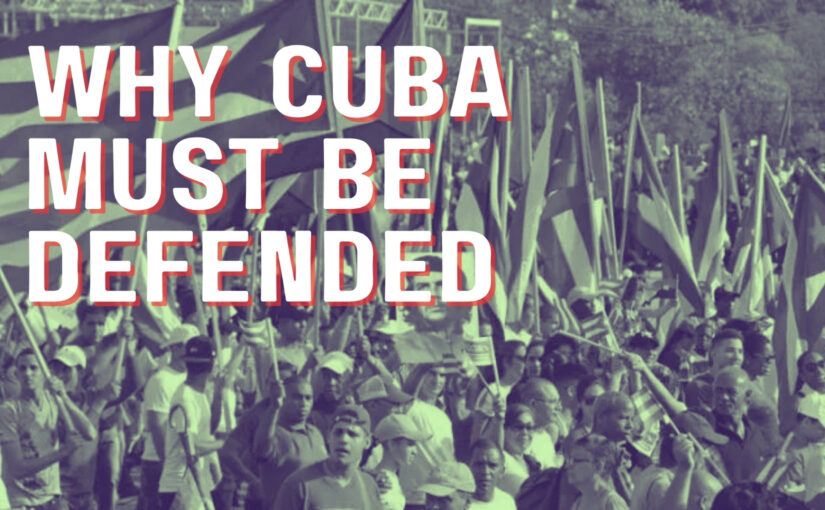
Why Cuba must be defended

The video embedded below is a speech given by Carlos Martinez at a fundraiser for Cuba, organised by the Portland Global Friendship Group, held on Friday 13 March 2026.

Cuba is facing the gravest crisis in the history of its revolution. The US economic blockade, now in its seventh decade, has been systematically tightened to the point where the island faces blackouts of up to twenty hours a day, acute fuel shortages, and disruption to food supplies.

The blockade has been in place since 1962 – the longest-running embargo in modern history – and has cost Cuba an estimated 2 trillion USD, adjusted to today’s prices. The 1996 Helms-Burton Act extended its reach extraterritorially, penalising companies in third countries for doing business with Cuba in a manner that is flagrantly illegal and unprecedented in modern economic warfare. Cuba’s listing on the US State Sponsors of Terrorism list is designed to choke off Cuba’s access to international banking and finance, making even routine trade almost impossibly difficult.

The immediate trigger for the current energy crisis is the collapse of oil supplies. Cuba had developed a close and mutually beneficial relationship with Venezuela since the start of the Bolivarian Revolution, and Venezuela had been supplying up to 100,000 barrels of oil per day, in exchange for the services of vast numbers of Cuban doctors, teachers and other experts. The Trump administration’s invasion of Venezuela in January and the kidnapping of Nicolás Maduro was motivated by multiple strategic objectives, but strangling Cuba was almost certainly among them. The result has been devastating.

Trump has been explicit about his goal: regime change in Cuba by the end of the year. Marco Rubio – the ideological driving force behind the Cuba policy – has openly threatened the Cuban government. The US is reportedly searching for government insiders willing to cooperate in a soft coup.

Why such a ferocious campaign against a small Caribbean island? The answer is largely ideological. Cuba represents the threat of a good example – a formerly colonised country, ninety miles from the US, that dares to assert that another world is possible: to control its own resources, follow its own development model, and align itself with the forces of progress globally. The US response is designed to demonstrate what happens to countries that make that choice.

Yet Cuba’s achievements under sixty-seven years of revolution, blockade and constant pressure are extraordinary. Literacy has risen from 70 percent at the time of the revolution to 99.8 percent – higher than both Britain and the US. Healthcare is free, universal and world-class: Cuba has one doctor for every 220 people, a life expectancy of 79 years, and an infant mortality rate of 4.83 per thousand live births. Cuba developed the world’s first meningitis B vaccine, and during the Covid pandemic produced its own vaccines indigenously, despite the blockade, achieving mass vaccination ahead of far wealthier nations.

The 2022 Family Code, developed through an extensive popular consultation process and passed by referendum with a 74 percent turnout, is one of the most progressive family law frameworks in the world. Women hold 43 percent of parliamentary seats. The World Wildlife Federation has declared Cuba the only country on earth to have achieved sustainable development by the dual measure of human development and environmental sustainability.

Cuba’s internationalism is perhaps its most extraordinary dimension. Over 400,000 Cuban medical personnel have served in 164 countries. Cuba deployed 375,000 troops to Angola between 1975 and 1991, playing a decisive role in protecting Angola’s independence, defeating South African apartheid forces and helping liberate Namibia — prompting Nelson Mandela to describe Cuba’s contribution as “unparalleled in African history”.

Cuba is now responding to the energy siege not with surrender but with transformation. Solar power has tripled in a single year, from 5.8 percent to over 20 percent of electricity generation. Forty-nine new solar parks have been connected to the grid. China has been Cuba’s most important partner in this effort: 92 solar parks are being built with Chinese equipment, financing and expertise, with a combined capacity matching Cuba’s entire current fossil fuel output.

But Cuba urgently needs international solidarity. As Fidel Castro said in 1994, “we understand what it would mean for all the progressive forces, for all the revolutionary forces, for all the lovers of peace and justice in the world, if the United States succeeded in crushing the Cuban Revolution”. The defeat of the Cuban Revolution would embolden imperial aggression everywhere – a signal that no country, however principled, can defy global capital and survive.

China plays a crucial role supporting progress and sovereignty in Latin America

This article by Carlos Martinez, which first appeared in the Morning Star of 4 December 2021, discusses China’s economic engagement with Latin America in recent decades; debunks claims that this engagement is a form of neocolonialism; and concludes that China’s solidarity with Latin America is an important support for sovereign development in the region.


In the last two decades, economic links between Latin America and the People’s Republic of China have been expanding at a dizzying rate. Bilateral trade in 2000 was just 12 billion USD (1 percent of Latin American’s total trade); now it stands at 315 billion USD. In the same time period, China’s foreign direct investment in Latin America has increased by a factor of five.

Since the launch of the Belt and Road Initiative in 2013, 19 of the 33 countries in the Latin American and Caribbean region have signed up to the China-led global infrastructure development strategy. Infrastructure projects have been a particular focus for Chinese firms. Writing in Foreign Policy in 2018, Max Nathanson observed that “Latin American governments have long lamented their countries’ patchy infrastructure.” China has “stepped in with a solution: roughly $150 billion loaned to Latin American countries since 2005.”

Continue reading China plays a crucial role supporting progress and sovereignty in Latin America

Book Review: Juan Martín Guevara – Che, My Brother

This is a slightly expanded version of an article that appeared in the Morning Star on 15 May 2017.


Given the number of biographies of Ernesto ‘Che’ Guevara that have been published in the 50 years since his assassination, many authors would probably struggle to find anything original to write about. Che’s youngest brother Juan Martín Guevara, however, is able to offer an unparalleled insight into the family life, background, influences and early experiences that helped to form the legendary revolutionary.

Such is the stated purpose of the book: to take Che down from the cross; ”to get people to know Che as more than a myth”; to understand how Che was made, in order that more people like Che might emerge to wage the struggle – not necessarily guerrilla warfare, but broad political struggle for the values Che fought for. The world desperately needs people with the intellect, passion, commitment and heroism of Che, and Juan Martín Guevara’s book seeks to inspire the emergence of such people. ”It is important to understand that Ernesto began as a normal and even ordinary person, who became an exceptional person that others can and should emulate.”

The Guevara family were not salt-of-the-earth workers or humble indigenous peasants; they were highly-educated middle-class bohemians. How did such a family produce a fierce proletarian revolutionary such as Che? Juan Martín explains that there was always a strong sense of social justice in the family, combined with a profound commitment to study and to freedom of thought. ”At home, everyone was free to think more or less what he or she wanted, provided of course we didn’t support fascist ideas. Our home was a meeting place for many politically active characters. This hyper-politicised family atmosphere would shape Che.”

Even in childhood, Che had a strong character: purposeful, self-disciplined, resourceful, principled and adventurous. In addition, he was a voracious reader (”Ernesto consumed on average a book a day, taking advantage of every free moment to delve into some volume or other”). He distinguished himself from other middle-class young people in that he was willing and able to get to know the poor, and was therefore exposed to the appalling poverty, inequality, oppression and injustice that exist in class society. His intellect, his character and his experiences – along with the luck of meeting Fidel Castro and his comrades in Mexico – combined to turn the young Ernesto Guevara into the immortal Che.

Juan Martín’s writing is lively and endearing as he presents the story of his famous brother’s early years, along with his own story of struggle against the Argentinian dictatorship (for which he suffered eight years in prison, in appalling conditions). It is by no means the definitive biography, but it is valuable as a means of better understanding Che and the Guevara family.

Of course Juan Martín, as a political disciple of Che, has his own interpretation of Guevarismo, which he emphasises is very different to socialism as practised in the Soviet Union. He even goes so far as to state that he suspects the KGB of having collaborated with the CIA to eliminate Che in Bolivia – although needless to say no proof is offered. This is not a helpful addition to the book. Che certainly had his critique of Soviet socialism, but he was alive to the subtlety and complexity of politics, could see the contradictions and problems faced by the Soviet Union, and had the self-discipline not to go too far in his open criticism. After all, Soviet support was decisive in the survival of socialist Cuba – as has been recognised many times by Fidel and Raúl Castro.

Small flaws aside, this is an insightful and valuable book.