China’s green revolution is a result of its socialist revolution

A talk given by Carlos Martinez to the Young Communist League’s Harry Pollitt School, on China’s international strategy on climate and the environment.

Carlos looks at what’s actually happening on the ground: China’s solar capacity has overtaken coal for the first time, its carbon emissions have been flat or falling for nearly two years, and it’s now exporting that green transition to the Global South – financing solar and wind projects across Africa, helping Cuba keep the lights on through a brutal US blockade, and making clean energy cheap enough for the rest of the world to actually use. The talk sets this against the record of the imperialist powers, and makes the case that China’s record isn’t an accident, but the product of a planned, socialist economy.

Transcript

Comrades, thank you very much for inviting me, and thanks to the Young Communist League for organising this year’s Harry Pollitt School – and for supporting the Socialist China Conference last weekend.

I’ve been asked to talk about China’s international strategy in relation to the environment.

Starts at home

China’s international role rests on what it has done at home, so let me start there briefly.

For years we were told that China was the world’s greatest climate villain – the biggest emitter of greenhouse gases; building coal plants left, right and centre.

It’s true, China is overall the world’s biggest emitter of greenhouse gases – albeit it’s a very large country with a population of 1.4 billion people, and a manufacturing powerhouse that engages in a great deal of industry, and its per capita emissions are half those of the United States or Canada.

It’s also true that China still burns more than half the world’s coal.

But there is an unmistakeable direction of travel. In July, China’s installed solar capacity overtook coal for the first time, reaching 1,286 gigawatts – around ten times Britain’s entire generating capacity from all sources. Coal has gone from around 80 percent of China’s energy mix a few decades ago to under 50 percent today, and this number continues to fall. Where new coal stations are built, these are typically to provide backup capacity for intermittent renewable sources, which means they’re playing an important role in the energy transition. In 2025, China added more solar than the rest of the world combined.

China’s carbon emissions have now been flat or falling for nearly two years. And last year, for the first time, China committed to an absolute cut in emissions: 7 to 10 percent below peak by 2035.

As is well known, China is by far the world leader in electric vehicles, electric buses, high-speed rail, batteries, solar panels, wind turbines and other clean energy technologies.

None of this happened by accident. Carbon Brief recently went through the 72 thematic five-year plans published by Chinese ministries this year, and found that 54 of them – three quarters – include policies or targets related to climate change and energy. Decarbonisation in China runs through the whole system of economic planning.

That’s possible because the commanding heights of the economy are in public hands, because the major banks are state-owned, because even the private economy is regulated and incorporated into the planning system, and because economic priorities are connected to the long-term needs of society rather than the pursuit of short-term profit.

Affordable and renewable

The single biggest contribution China has made to the global fight against climate breakdown is something fairly prosaic: it has made clean energy cheap.

Over the last 15 years, the global cost of solar power has fallen by more than 80 percent, and wind by around 60 percent, almost exclusively the result of Chinese investment, innovation and scale. As Kevin Tu of Columbia University put it, “if the Chinese manufacturers had not brought down the cost of panels by more than 95 percent, we could not see so many installations across the world.”

This is a game changer for the Global South. Africa has 60 percent of the world’s best solar resources – meaning that it’s exposed to a hell of a lot of solar radiation – but until recently it was too expensive to leverage that. Now it isn’t.

Africa’s solar installations rose by 54 percent last year. And when the criminal US–Israeli war on Iran sent oil and gas prices through the roof this spring, countries across Asia and Africa responded by buying Chinese solar.

In March, according to Ember Energy, Chinese solar exports hit an all-time record of 68 gigawatts, equivalent to Spain’s entire solar capacity. Exports to Africa nearly tripled in a single month, and Nigeria, Ethiopia and Kenya each imported more than a gigawatt for the first time.

So every target in China’s five-year plan is also manifested in the green transition in the Global South.

Global cooperation

In 2021, Xi Jinping announced at the UN General Assembly that China would build no new coal-fired power plants abroad. Today, 59 percent of China’s energy projects in Africa are solar and wind.

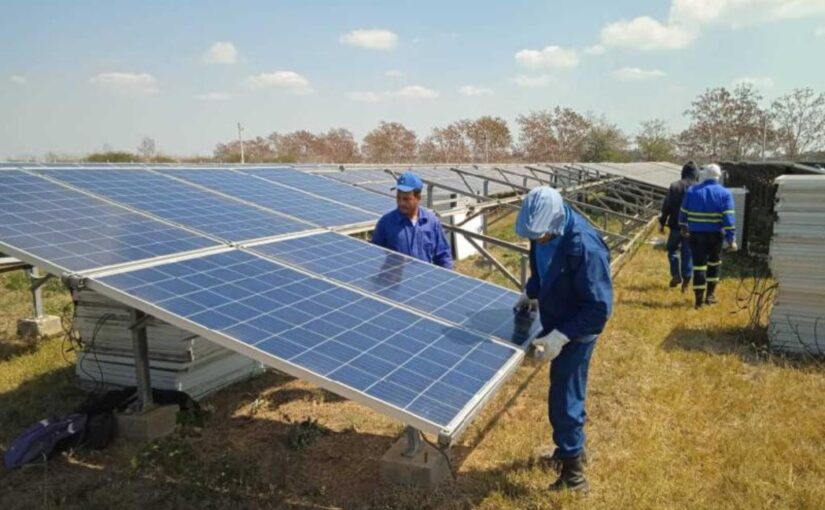
Chinese companies have built the Benban solar park in Egypt, wind farms in Ethiopia and South Africa, hydroelectric stations in Zambia, and a battery-backed solar plant is going into every one of Zambia’s 156 constituencies.

And this is not about creating a relationship of dependency. China is helping countries in the Global South to build their own renewable energy industries. For example, when Zimbabwe decided to stop exporting raw lithium, a Chinese company committed 400 million dollars to building a processing plant there.

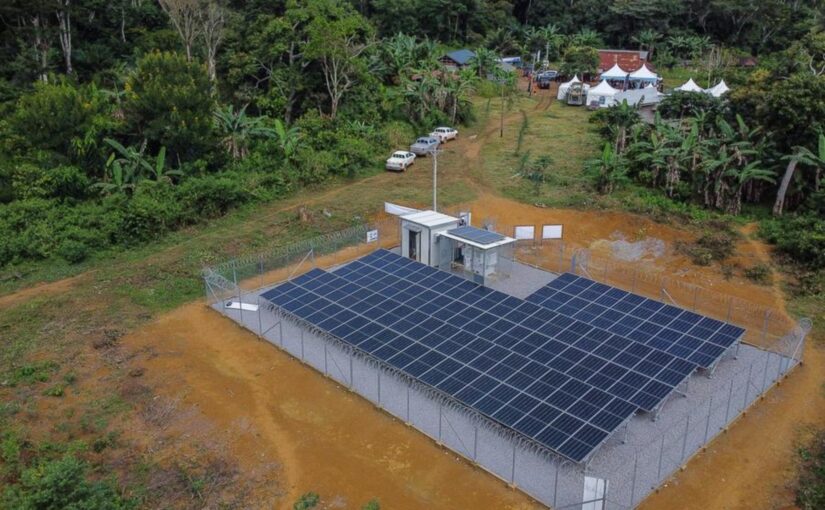
The most moving and most poignant example is Cuba. Facing a barbaric – let’s say it, genocidal – energy siege imposed by the Trump regime, with the national grid collapsing again and again, and tens of thousands of patients waiting for operations, China has helped Cuba install around 900 megawatts of solar power. At the Socialist China conference last Saturday, First Secretary at the Cuban Embassy Pablo Ginarte told us this had taken the renewable share of Cuba’s electricity from around 3 percent to 21 percent in a single year. As he put it: “The United States cannot blockade the sun”.

Bizarrely, there are some in the West, and in the Western left, who see all this progress and call it “green imperialism”. These modern-day Lenins have come up with a new definition of imperialism that doesn’t include domination or coercion; where a country can become an imperialist power without wars, coups, military bases, destabilisation campaigns, unilateral sanctions, economic coercion, unequal exchange or structural adjustment. Apparently China has become imperialist through building solar farms in Zambia. Either this is a stunning and important theoretical development, or it’s utter nonsense; I’ll leave it to you to decide.

Defending multilateralism

China has also been the most consistent defender of the international framework for tackling climate change. It insists on the Paris Agreement, and on the principle of common but differentiated responsibilities – the idea that the rich countries, which caused the problem, should take the lead in cutting emissions and should provide technology and financial resources for sustainable development in the Global South.

Although, as an aside, in reality it’s China that’s doing the lion’s share of this work!

Meanwhile, Trump has pulled out of the Paris Agreement for a second time, called climate change “the greatest con job ever perpetrated on the world”, and made “drill, baby, drill” the official energy policy of the most powerful country on Earth.

Not to mention waging war on Iran and supporting a genocide in Gaza, both of which are having devastating environmental consequences.

Meanwhile, Washington and Brussels slap tariffs on Chinese solar panels, batteries and electric vehicles – the very things the world needs most – and accuse China of “overcapacity” for making too many of them.

Why this matters

What does all this mean for us in Britain?

First, it means that the New Cold War is not only a threat to peace; it’s a threat to the planet. Every tariff on Chinese solar panels and every attempt to cut China out of supply chains makes the green transition slower and more expensive, in Britain as much as anywhere. A Britain that cooperated with China on renewable energy, on electric transport, on grid technology, would be doing far better on its climate commitments, and furthermore would bring down energy bills.

Second, it’s a reminder that socialism works. The West has had more than 30 years of climate summits, and we’ve been told the whole time that the market will sort it out, or that we can save the planet if only we take shorter showers and make sure we put our packaging in the right bin. China has shown that a green transition happens when a socialist state plans for it, invests in it and puts the long-term needs of humanity ahead of short-term profit.

And third, many people who care about the environment are starting to look at China with fresh eyes, and to ask why it is succeeding where our own rulers are failing. As young communists, you are well placed to help them find the answer.

Xi Jinping said last year that “however the world may change, China will not slow down its climate actions, will not reduce its support for international cooperation, and will not cease its efforts to build a community with a shared future for mankind.”

Let’s do what we can to support that, and to build a world where cooperation, not coercion, is the guiding principle of international relations.

Thank you.

Hangzhou’s two transformations: frontier technology and ecological civilisation

In the following article, Carlos Martinez draws on a recent visit to Hangzhou, the capital of Zhejiang Province, to examine how the city has become at once a centre of frontier technology – home to DeepSeek, Unitree Robotics and Alibaba – and a testing ground for ecological civilisation.

Carlos traces both transformations back to Zhejiang’s “Eight-Eight Strategy”, launched in 2003 when Xi Jinping was provincial Party secretary, and shows how public institutions have created the conditions for innovation while directing it towards wider developmental goals. He sets out the material record of the green transition – distributed solar overtaking coal, clean rivers and a restored West Lake, a metro network that has grown fivefold in seven years – while also confronting the contradiction at its heart: the AI and cloud-computing industries that make Hangzhou a technology leader are among its fastest-growing sources of electricity demand.

The direction of technological change, he concludes, is a political choice, requiring “long-term planning, public investment and institutions capable of subordinating private profit to the common good”. The article complements Gary Wilson’s recent analysis of the US chip blockade and the discussion on AI and the new quality productive forces at the recent Socialist China Conference.

A version of this article first appeared in Beijing Review.

Visiting Hangzhou in April, the signs of change were everywhere: electric vehicles crowding the roads, an extensive metro system, e-bikes as a default mode of transport for millions, and well-maintained residential communities built around shared green space and public amenities.

Hangzhou has emerged simultaneously as a centre of frontier technology and a testing ground for ecological civilisation. It is home to DeepSeek, Unitree Robotics and Alibaba; it is also a city of restored waterways, expanding wetlands, distributed solar power and extensive low-carbon transport.

Both of these development threads have common roots in a strategy laid down more than two decades ago.

A twenty-year harvest

Hangzhou is now a megacity of 12.7 million people. Its economy reached 2.3 trillion yuan ($330 billion) in 2025, while the core industries of its digital economy account for 29.5 percent of GDP. This is not a small technology enclave surrounded by an otherwise traditional economy. Digital development has become one of the city’s principal productive forces.

The Western media discovered Hangzhou’s technology sector in early 2025, after the success of DeepSeek and the emergence of the so-called “six little dragons”: DeepSeek, Unitree, Game Science, Deep Robotics, BrainCo and Manycore Tech. The label is journalistic rather than official; what matters is the ecosystem beneath it.

Three of the six have founders who studied at Zhejiang University, which has established itself as one of the world’s leading research institutions. Those companies have also benefited from dense manufacturing supply chains, a large pool of engineers, competitive domestic markets and a local government willing to build institutions around emerging industries.

Hangzhou’s “Scene” platform, for example, matches hundreds of practical industrial demands with available technological capabilities. The ModelScope Developer Centre provides qualified firms with workspace and access to an open AI ecosystem. In December 2025, the city adopted China’s first local regulations specifically for embodied artificial intelligence, addressing safety, data access, public procurement and the difficult transition from laboratory prototype to commercial application.

This is a story of public institutions creating the conditions in which innovation can occur, then attempting to direct that innovation towards wider developmental goals.

The origins lie in Zhejiang’s “Eight-Eight Strategy”, launched in 2003 when Xi Jinping was provincial Party secretary. The strategy combined advanced manufacturing, regional integration and scientific development with the construction of an “ecological province”.

Over two decades later, Zhejiang is still harvesting the results of that groundwork. DeepSeek was founded in 2023, and within two years had produced a frontier AI model with performance comparable to leading closed systems. A relatively small Chinese team, working under US restrictions on advanced semiconductors, achieved frontier-level performance with unusually low computational requirements. DeepSeek released its model weights and inference code under a permissive MIT licence, which open-weights approach helped drive down prices across the industry and made powerful AI systems accessible to a much wider range of users and countries.

Unitree tells a related story. The launch price of its humanoid robots fell from around $90,000 in 2023 to $5,900 in 2025, reflecting the depth of China’s component suppliers and manufacturing infrastructure.

Ecological civilisation in material form

Hangzhou’s green transformation has followed the same pattern: targets, infrastructure, experimentation and adjustment.

By the end of 2025, Zhejiang had around 71 gigawatts of wind and solar capacity – more than four times the 2020 level. Solar had overtaken coal as the province’s largest single source of installed power capacity, and more than four fifths of it was distributed, principally across rooftops and commercial and industrial sites. Zhejiang also had 10.3 gigawatts of pumped-hydropower storage, the largest provincial total in China.

The city of Hangzhou itself reached 7.55 gigawatts of solar capacity by June 2026, already exceeding its 2030 target of 6.5 gigawatts. The provincial energy big-data centre monitors energy systems in real time, while virtual power plants coordinate batteries, electric vehicles and commercial buildings to help balance supply and demand. The energy transition is therefore not simply a matter of installing panels; it involves constructing a more flexible and intelligent electricity system around them.

The progress on water management is equally impressive. Zhejiang’s Five Water Co-treatment campaign, launched in 2013, has vastly expanded sewage-treatment capacity, cleared thousands of kilometres of polluted rivers and tackled agricultural sources of contamination.

By 2025, 99.7 percent of the province’s nationally and provincially monitored water sections were at Grade III or better. All eight major river systems, together with the Grand Canal, reached that level for the first time. In Hangzhou, monitored surface-water sections and drinking-water sources have achieved full compliance for five consecutive years.

The famous West Lake offers a visible measure of the change. Average water transparency increased from 43.7 cm in 2002 to 1.3 metres in 2024, supported by restored submerged vegetation and a long-running water-replenishment project. Xixi, China’s first national wetland park, has recorded dramatic increases in its numbers of bird and plant species. Hangzhou was accredited as an International Wetland City in July 2025.

As is the case elsewhere in China, transport has been changing rapidly. The metro grew from 104 km in early 2018 to 516 km by the end of 2025, carrying 1.5 billion journeys that year. Hangzhou had more than 1.25 million new-energy vehicles on its roads by June 2025, along with an extensive public bicycle network.

Managing the contradiction

None of this means the work is complete. Zhejiang is still adding coal-generating capacity, even as renewables grow, because electricity demand is rising extraordinarily quickly – provincial consumption increased by more than 7 percent in 2025.

Hangzhou’s two transformations themselves constitute something of a contradiction, in that the AI and cloud-computing industries that make the city a technology leader are among its fastest-growing sources of electricity demand. Electricity use by internet data services rose 159 percent in 2025, while Alibaba Cloud anticipates a tenfold increase in its energy consumption.

The municipal response has been to impose a power-usage-effectiveness ceiling of 1.2 on new large data centres, while expanding solar power, storage and smart-grid management. This is the real content of a green transition: not the absence of contradictions, but the capacity to identify and manage them.

The city’s experience suggests that future technology and ecological development cannot be separated. Artificial intelligence can help integrate renewable energy, manage transport, monitor pollution and use resources more efficiently; but it also consumes electricity and materials on an enormous scale. The task is not to choose between becoming “smart” and becoming green. It is to ensure that technological development remains subject to social and ecological goals.

Hangzhou does not offer a finished model, still less a future without contradictions. What it does show is that the direction of technological change is a political choice. Markets can generate new products, but they cannot by themselves coordinate energy systems, restore waterways, build public transport or ensure that the costs and benefits of innovation are shared. Bringing future technology into line with ecological civilisation requires long-term planning, public investment and institutions capable of subordinating private profit to the common good.

Sunlight and sovereignty: the Chinese technology behind Africa’s solar boom

Africa’s solar installations rose by a record 54 percent in 2025, and 15 major African markets imported more than $400 million worth of solar panels in the first quarter of 2026 alone – more than two-thirds of the total for the whole of the previous year. In this article, Carlos Martinez looks at what lies behind those numbers.

The projects driving the continent’s green transition are overwhelmingly built and financed by China, from the Benban Solar Park in Egypt and the Adama wind farms in Ethiopia to De Aar in South Africa and a solar plant with battery storage in every one of Zambia’s 156 constituencies. What has made them viable is two decades of sustained Chinese public investment, which has driven the global cost of renewable energy down to a fraction of what it was 15 years ago.

Carlos also takes on the charge, increasingly fashionable in parts of the Western left, that this amounts to a new “green imperialism”. Market share, he argues, describes a trade relationship, not domination and coercion – and the function of the accusation, whatever the intention behind it, is to manufacture consent for the New Cold War.

This article was first published by Friends of Socialist China.

A report in the South China Morning Post on 7 September highlights the contrast in energy policy between the United States, where, particularly under the present administration, the watchword is “drill, baby, drill”, and China, where the national strategy is to “walk towards the light”. Two energy behemoths, two approaches to the future of the planet, and the resulting choice facing the people of Africa.

The SCMP article observes that, for African governments seeking to expand access to electricity, the principal deciding factor is cost. And on cost, the argument is now over.

Africa’s solar installations rose a record 54 percent in 2025, adding 4.5 gigawatts of new photovoltaic capacity, and that record is likely to be broken again this year. The International Energy Agency reports that 15 major African markets imported more than $400 million worth of solar panels in the first quarter of 2026 alone – against $600 million for the whole of 2025.

“Africa’s solar revolution is here,” says Sonia Dunlop, chief executive of the Global Solar Council. “Growth is spreading to new markets across the continent, and rooftop and distributed systems are putting power directly into the hands of households and businesses.”

Continue reading Sunlight and sovereignty: the Chinese technology behind Africa’s solar boom

Slander over solidarity: the BBC reports a Himalayan disaster

The following article by Carlos Martinez examines the BBC’s coverage of the catastrophic glacier collapse of 26 August, which sent a wall of ice, rock, mud and water down the river valleys straddling the border between Nepal and China’s Tibet (Xizang) Autonomous Region, killing well over a thousand people.

Rather than report on the disaster itself, or on its underlying cause in the accelerating warming of the world’s highest mountain range, the BBC’s China correspondent chose to run a story alleging that Beijing was suppressing footage of the event – footage which, as Carlos points out, had been released by the Chinese port authorities at Gyirong and was circulating widely on Chinese platforms. A massive rescue operation, with the direct involvement of China’s top leadership, becomes a “muted response”; Communist Party members being asked to assist their neighbours becomes evidence of authoritarian anxiety.

The article also takes apart the BBC’s assertion that Tibet was “annexed” by Beijing in the 1950s – a formulation at odds even with the declared position of the British government, which abandoned the colonial-era doctrine of “suzerainty” in 2008.

This article first appeared in the Morning Star.

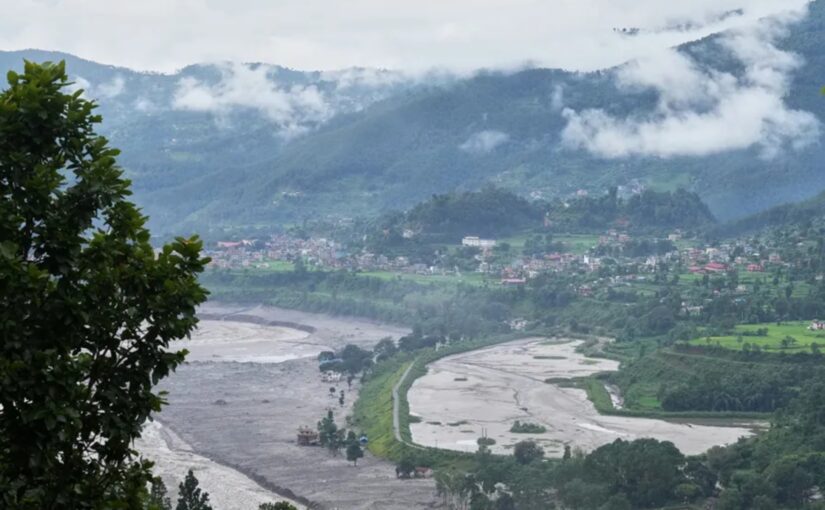
On August 26, a glacier collapsed high on the Nepali side of the Himalayan range, sending a wall of ice, rock, mud and water down the river valleys straddling the border between Nepal and China’s Tibet (Xizang) autonomous region. Some 42 kilometres of road were wiped out, leaving helicopters as the only means of reaching survivors. At the time of writing, Nepal’s death toll has since passed 900, with more than 4,000 people missing; on the Chinese side, 16 have been confirmed dead, and 546 are reported missing.

This is the disaster that Laura Bicker, the BBC’s China correspondent, chose to report as follows: “Shocking footage isn’t being shown in China – and we know little about victims there.”

Numerous people in China immediately pointed out that the footage is, in fact, all over Chinese platforms. Indeed, the very video used in the BBC’s own report was released by the Chinese port authorities at Gyirong. So the sequence runs: the Chinese state published the clip; the BBC ran the clip; the BBC then published a story about how the Chinese state is suppressing the clip.

Several commentators have made another significant point: Chinese media does not operate on the principle of “if it bleeds, it leads.” You will not see grieving relatives and footage of bodies looped for 24 hours. The BBC treats the absence of disaster pornography as evidence of a cover-up rather than a different editorial culture.

Continue reading Slander over solidarity: the BBC reports a Himalayan disaster

Sunlight against the blockade: China and Cuba’s solar revolution

China has delivered a second consignment of 5,000 photovoltaic systems to Cuba, destined for rural communities, health centres, day nurseries and bank branches – the latest instalment in what has become one of the fastest energy transitions anywhere in the world. With Chinese equipment, finance and technical support, Cuba has installed around 1,000 MW of new solar capacity in two years, with 92 medium-sized parks due for completion by 2028, while Chinese solar exports to the island have risen from $3 million to $117 million in as many years. All of this is taking place against a grid pushed towards collapse by Washington’s energy siege, with available capacity at times barely a third of peak demand.

The following article by Carlos Martinez sets out why this amounts to considerably more than an infrastructure project: oil tankers can be intercepted, suppliers threatened and banks sanctioned, but sunlight cannot be blockaded.

This article was first published by Friends of Socialist China.

China has delivered a second consignment of 5,000 photovoltaic systems to Cuba, destined for rural communities, health centres, day nurseries and bank branches. Receiving them, President Miguel Díaz-Canel said Cuba “deeply appreciates this gesture by the Chinese people and government, which adds to the efforts Cuba is making to change its energy mix, amid the genocidal blockade”.

The donation is a small part of what has become one of the fastest energy transitions anywhere in the world. Over the past two years, with Chinese equipment, financing and technical support, Cuba has installed around 1,000 MW of new photovoltaic capacity. This forms the first half of a programme to construct 92 medium-sized parks, each generating approximately 21.8 MW, with a combined capacity approaching 2,000 MW by 2028. Alongside this credit-financed programme, China is donating a further 120 MW through a network of smaller parks. Solar supplied roughly 10 percent of Cuba’s electricity over the course of 2025; during daylight hours its contribution is now considerably higher, at times approaching half of national generation around midday.

The scale of this expanding cooperation can be read in the trade figures. Chinese exports of solar equipment to Cuba came to $117 million in 2025, against just $3 million two years earlier. Havana furthermore has scrapped tariffs on photovoltaic systems, solar water heaters, wind turbines, biodigesters and renewable-powered air conditioning.

Continue reading Sunlight against the blockade: China and Cuba’s solar revolution

‘But at what cost?’: the Yangtze edition

The Economist has reported a striking piece of good news: fish biomass in the Yangtze has risen by more than 200 percent since 2021, reversing seven decades of decline, with a rare sturgeon spawning in the wild for the first time in two decades and finless porpoise numbers climbing again. The turnaround – confirmed by a peer-reviewed study – followed the largest freshwater fishing moratorium ever attempted, the closure of thousands of chemical factories, mass reforestation, and the compensation and retraining of some 200,000 fishermen.

Yet, as the following article argues, the magazine could not resist straining to make an ecological triumph sound sinister – branding China’s approach “eco-authoritarian”. It is the “but at what cost” genre in its purest form: the reflex of a worldview that cannot survive the admission that a socialist country is surpassing the West on both ecological and economic performance.

This article was first published by Friends of Socialist China.

The Economist has reported a remarkable and very welcome piece of news. Fish biomass in the Yangtze has risen by more than 200 percent since 2021, reversing seven decades of decline. A rare sturgeon has been observed spawning in the wild for the first time in twenty years. Finless porpoise numbers are up from a low of around 1,000 in 2017 to more than 1,400. And this is not Chinese state media talking: it comes from a study, published in the journal Science, by researchers in China, Canada, the United States and France.

How was it done? Through a ten-year commercial fishing ban across the river, its major tributaries and the lakes of its basin – the largest freshwater fishing moratorium ever attempted. Thousands of chemical factories were closed or relocated. Forests were planted on the upper reaches to hold the soil. Cities were “spongified” with artificial wetlands and permeable surfaces to absorb rainfall and filter stormwater. And some 200,000 fishermen were taken off the water, compensated and retrained for other work. A river that was being killed is coming back to life.

The Yangtze programme is one component of China’s ecological civilisation strategy – written into the country’s constitution in 2018 and pursued through the same instruments that have sustained China’s economy: long-term planning, massive public investment, and a state with the capacity to override short-term private interest in the name of a collective good. It is the same capacity that has made China the world’s undisputed leader in renewable energy, reforestation and electric transport.

But at what cost?

Having reported all this, the good people of the Economist search desperately for a way to make it sound sinister. “The Chinese Communist Party, once famous for pillaging from the natural world, has set to protecting parts of it”, the magazine concedes – before warning that the country’s “eco-authoritarian” approach, “top-down and intolerant of resistance”, “deserves scrutiny before being imitated”. This absurd framing drew an immediate backlash.

China is condemned for not listening to the fishermen – who wanted to carry on fishing – and to environmentalists – who want fewer dams. The complaint about dams is telling: hydropower is not only low-carbon but dispatchable, able to be ramped up on demand and, through pumped storage, to balance the wind and solar that cannot – which is precisely why it does work that would otherwise fall to coal. To oppose it in the abstract, without saying what should generate the electricity instead, is to lean in practice towards fossil-fuelled generation. So are we to understand the Economist would be happier with the status quo of a dying river, a collapsing fishery, a species on the brink of extinction, and a climate crisis that is accelerating because of the failure to decarbonise?

Such a line of reasoning brings to mind Michael Parenti’s observation, in Blackshirts and Reds, about the absurdity of Cold War propaganda:

During the cold war, the anticommunist ideological framework could transform any data about existing communist societies into hostile evidence. If the Soviets refused to negotiate a point, they were intransigent and belligerent; if they appeared willing to make concessions, this was but a skilful ploy to put us off our guard. By opposing arms limitations, they would have demonstrated their aggressive intent; but when in fact they supported most armament treaties, it was because they were mendacious and manipulative.

If the churches in the USSR were empty, this demonstrated that religion was suppressed; but if the churches were full, this meant the people were rejecting the regime’s atheistic ideology. If the workers went on strike, this was evidence of their alienation from the collectivist system; if they didn’t go on strike, this was because they were intimidated and lacked freedom. A scarcity of consumer goods demonstrated the failure of the economic system; an improvement in consumer supplies meant only that the leaders were attempting to placate a restive population and so maintain a firmer hold over them.

The article notes, almost in passing, that the fishermen who lost their livelihoods were given compensation and retraining. It does not mention that this is an awful lot better than what Britain’s coal miners got in the 1980s, or what the cod fishermen of Newfoundland got in the 1990s – communities that their own governments simply abandoned to their fate once they had ceased to be useful.

This is the “but at what cost” genre in its purest form. China eliminates extreme poverty; but at what cost. China builds the world’s largest high-speed rail network; but at what cost. China brings its greatest river back from ecological death; but at what cost. The real cost, evidently, is to Western hegemony – and to a worldview that cannot survive the admission that a socialist country is surpassing the West in both ecological and economic performance.

China and Cuba’s solar revolution: solidarity in practice

As Donald Trump tightens his energy stranglehold on Cuba – severing oil supplies, threatening countries that dare to help, and following the Kissinger playbook of “making the economy scream” – a remarkable story of socialist solidarity is unfolding.

Writing in the Morning Star, Carlos Martinez documents how China has stepped into the breach, assisting Cuba with its energy sovereignty and its green transition. Chinese solar exports to Cuba have rocketed from $5 million in 2023 to $117 million in 2025. Beijing has committed to building 92 solar parks on the island by 2028, with a combined capacity equivalent to Cuba’s entire current fossil fuel generation. Already, Cuba’s share of solar power has risen from 5.8 percent to over 20 percent in a single year – a pace of transition that energy analysts describe as one of the fastest ever achieved by a developing nation.

But as this article shows, China’s solidarity extends far beyond megawatts and megaprojects. Ten thousand photovoltaic systems have been donated for rural homes, maternity wards and health clinics. Five thousand solar kits installed across 168 municipalities are keeping medicines refrigerated and families powered through the blackouts. President Xi Jinping personally approved $80 million in emergency aid for electrical equipment. Chinese Ambassador Hua Xin has pledged “firm support under all circumstances.”

This, Carlos argues, is what South-South cooperation looks like in practice: technology, financing and humanitarian assistance with no conditionalities, no structural adjustment, no strings attached. Fidel Castro said in 2004 that China had become “the most promising hope and the best example for all Third World countries.” Cuba’s solar revolution suggests his assessment has only become more prescient.

When the lights go out in Havana — as they have done for up to 20 hours a day in the worst months of Cuba’s current energy crisis — the causes are not difficult to identify.

The United States’ economic blockade, in place since 1962 and systematically tightened under successive administrations, has cost Cuba an estimated $160 billion ($2 trillion in current prices, which is equivalent to around 20 years of Cuba’s annual GDP).

The latest escalation of this cruel and illegal blockade has involved a full-scale energy embargo, with the US attempting to completely cut off Cuba’s access to oil.

The kidnapping of Venezuelan President Nicolas Maduro three months ago resulted in the severing of by far Cuba’s most important energy supplier.

Trump’s tariff threats then forced Mexico to cancel emergency oil shipments.
The result has been blackouts, fuel shortages and severe disruption to daily life across the island. The Trump regime is following the Kissinger playbook of “making the economy scream” in order to force regime change.

And life is unquestionably being made difficult. As a Cuban hairdresser told Medea Benjamin of CodePink in February: “You can’t imagine how it touches every part of our lives. With no gasoline, buses don’t run, so we can’t get to work. We have electricity only three to six hours a day. There’s no gas for cooking, so we’re burning wood and charcoal in our apartments. It’s like going back 100 years.”

Thankfully, at the end of March, a Russian tanker carrying an estimated 730,000 barrels of crude oil docked in Havana, providing some urgently needed relief. But Cuba’s energy import situation continues to be highly precarious and uncertain.

Nobody can blockade the sun 

The Cuban people’s response to this siege has not been surrender. It has been transformation — and at the heart of that transformation is a remarkable programme of solar energy development, driven by one of the most significant acts of international solidarity in the history of the global green transition.

China’s support for the Cuban renewable energy programme has accelerated dramatically in recent years. Chinese solar exports to Cuba rose from $5 million in 2023 to $117m in 2025. A report in the Financial Times on April 6 notes that “thanks to Chinese technology, the Caribbean island has 34 solar parks in operation with a capacity of almost 1.2 gigawatts (GW), a 350 per cent increase on 2024, enabling Cuba to more than quadruple its proportion of solar-powered generation by the end of last year.”

Beijing has committed to building 92 solar parks in Cuba by 2028, with a combined capacity of approximately 2GW — equivalent to Cuba’s entire current fossil fuel generation capacity. The solar parks already connected to the grid are contributing 1GW. As a result, Cuba’s share of solar in total electricity generation has risen from 5.8 per cent a year ago to over 20 per cent today.

Energy analysts have described this as one of the most rapid solar transitions ever achieved by a developing nation.

Cuba has set official targets of generating 24 per cent of its electricity from renewables by 2030, rising to 40 per cent by 2035 and 100 per cent by 2050. At the current pace of buildout, the 2030 target looks well within reach — and may be exceeded considerably sooner.

Battery storage — currently in place at only four of Cuba’s 55 solar parks — will need to be expanded significantly to address the evening peak demand. Wind energy will also make a growing contribution, with 19 wind farms totaling 415 MW currently being built, again with Chinese support. But the pace of the solar buildout, measured against where Cuba was just months ago, is already extraordinary.

Chinese support at all levels China’s contribution extends beyond large-scale infrastructure. Beijing has also donated 10,000 photovoltaic systems for deployment in isolated rural homes and critical facilities — including maternity wards and health clinics — ensuring that medical equipment can continue to function and medicines can be refrigerated even during power cuts.

A further 5,000 solar kits have been installed in health centres across 168 municipalities, each comprising panels, inverters and storage batteries. The head of Cuba’s Electric Union described the household-level systems as life-changing: enabling families to run a refrigerator, a fan and a television, and reducing the rural-to-urban migration that energy poverty drives.

Furthermore, in January 2026, President Xi Jinping personally approved $80 million in emergency financial aid for electrical equipment, alongside a donation of 60,000 tons of emergency rice aid.

China has been involved in Cuba’s energy sector for many years — supplying wind turbines since 2018, providing electric buses through Yutong since 2005, and supporting the assembly of Chinese electric cars, scooters and bicycles in Cuba through the Caribbean Electric Vehicles (VEDCA) programme.

In 2021, Cuba joined the Belt and Road Energy Partnership, the Chinese-led international framework for clean energy investment. But the current programme represents a qualitative leap, driven in large part by the urgency of Cuba’s situation and the depth of the bilateral relationship.

As Chinese ambassador Hua Xin stated at the handover ceremony for a recent tranche of solar parks: China stands with Cuba in “firm support under all circumstances.” Cuban Energy Minister Vicente de la O Levy stated that the co-operation between the two socialist countries represents “a joint commitment to energy sovereignty.”

Socialist solidarity 

What is taking shape in Cuba is a demonstration, in the most concrete terms, of what South-South co-operation and socialist solidarity look like in practice: China is providing technology, financing, expertise, training and humanitarian assistance to a country under siege, with no conditionalities, no structural adjustment requirements, no demand for market access.

Hugo Chavez one described the flourishing ties between progressive Latin America and China as a “Great Wall against US hegemonism.” Cuba’s solar revolution is a powerful example of that wall in action.

Fidel Castro said in 2004 that China had become “the most promising hope and the best example for all Third World countries.” Two decades later, the US is raining bombs on Iranian civilian infrastructure, tightening its cruel blockade on Cuba, kidnapping Venezuela’s elected president, and supporting an ongoing genocide in Gaza.

China meanwhile is emerging as the major trading partner of the vast majority of global South nations; has become the world’s only renewable energy superpower; and consistently demonstrates its commitment to peace, international law and global prosperity.

Fidel’s assessment looks more prescient than ever.

China at the forefront of the green energy revolution

The following article by Carlos Martinez, written for the journal Communist Review, describes China’s progress in the field of environmental protection and sustainable development.


It is by now almost universally understood that humans need to transition away from fossil fuels and adopt renewable energy if we are to avoid catastrophic levels of climate change. As Hannah Ritchie, Deputy Editor and Lead Researcher at Our World in Data, says:

“Global temperatures are rising. Sea levels are rising; ice sheets are melting; and other species are struggling to adapt to a changing climate. Humans face an avalanche of problems from flooding and drought to wildfires and fatal heatwaves. Farmers are at risk of crop failures. Cities are at risk of being submerged. There’s one main cause: human emissions of greenhouse gases.[1]

The science is clear and widely accepted: human activity, most importantly the burning of fossil fuels, has increased the concentration of greenhouse gases in the atmosphere to an unprecedented level. This has led to more heat being trapped within the Earth’s atmosphere (that is, less heat is being radiated back into space), resulting in a global heating effect, which leads to more frequent and severe weather events, rising sea levels, and shifts in ecosystems.

Data from the ice core record, going back around 800,000 years, shows that carbon dioxide concentration has fluctuated quite widely, between around 170 and 280 parts per million (ppm), with a previous peak at 300 ppm around 320,000 years ago. CO₂ levels have been stable at around 270 ppm for the last ten thousand years, until a significant upward curve starting in the early 1800s and accelerating sharply from the 1950s onwards.[2] At the time of writing (June 2024), carbon dioxide concentration is 424 ppm.

Greenhouse gas concentration will continue to increase, and the corresponding ecological problems will get significantly worse, unless we either reduce our consumption of energy to an extraordinary degree or we switch to non-emitting forms of energy. The idea of reducing humanity’s overall energy consumption is not plausible. For the majority of the world’s population, low energy consumption correlates to poverty; to low standards of living. Clearly, socialists hope that most people in the developing world, over the course of the coming decades, will increase rather than decrease their consumption of energy, and will experience a corresponding improvement in quality of life. As such, the only realistic option for preventing climate breakdown whilst continuing to pursue development is to undertake a massive global transition to green energy: to meet humanity’s energy needs without releasing greenhouse gases into the atmosphere and without causing permanent damage to the environment.

Continue reading China at the forefront of the green energy revolution

China is building an ecological civilisation

This is an expanded and update version of the 2019 article China leads the way in tackling climate breakdown. A concise summary of the current version was carried by the Morning Star on 19 November 2022.

We must strike a balance between economic growth and environmental protection. We will be more conscientious in promoting green, circular, and low-carbon development. We will never again seek economic growth at the cost of the environment. (Xi Jinping)[1]

The cost of development

Few events in human history have resonated throughout the world as profoundly as the Chinese Revolution. Standing in Tiananmen Square on 1 October 1949, pronouncing the birth of the People’s Republic of China, Mao Zedong said “the Chinese people have stood up”. In standing up, in building a modern socialist society and throwing off the shackles of feudalism, colonialism, backwardness, illiteracy and grinding poverty, China has blazed a trail for the entire Global South. Lifting hundreds of millions of people out of poverty has been described even by ardent capitalists as “the greatest leap to overcome poverty in history”.[2] The UN Development Programme (UNDP) describes China’s development as having produced “the most rapid decline in absolute poverty ever witnessed”.[3] It is an extraordinary accomplishment that all Chinese people now have secure access to food, housing, clothing, clean water, modern energy, education and healthcare.

In environmental terms, however, this progress has come at a cost. Just as economic development in Europe and the Americas was fuelled by the voracious burning of fossil fuels, China’s development has been built to a significant degree on ‘Old King Coal’, the most polluting and emissions-intensive of the fossil fuels. Two decades ago, coal made up around 80 percent of China’s energy mix. Environmental law expert Barbara Finamore notes that “coal, plentiful and cheap, was the energy source of choice, not just for power plants, but also for direct combustion by heavy industry and for heating and cooking in people’s homes.”[4]

Continue reading China is building an ecological civilisation

Video explainer: Stop blaming China for the climate crisis

📺 In this brief presentation for the Friends of Socialist China YouTube channel, Carlos Martinez gives a comprehensive explanation of why the US and its allies’ attempts to push responsibility for the climate crisis onto China are hypocritical and ridiculous, and why cooperation on climate change is essential.