
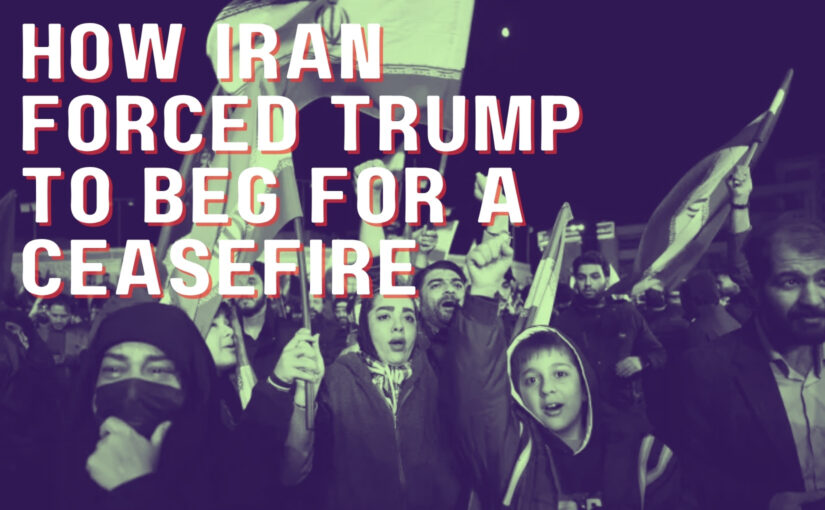
After 40 days of US-Israeli military aggression, Iran forced Washington to the negotiating table – on Iran’s terms. Trump agreed to a two-week ceasefire based on a 10-point Iranian proposal that included the lifting of all sanctions, acceptance of Iran’s enrichment rights, payment of war reparations, and the withdrawal of US combat forces from the region. This is a historic defeat for the US empire and a historic victory for the Iranian people. In the video below, Carlos Martinez breaks down:
- The crucial China-Russia veto at the UN Security Council – which happened just hours before the ceasefire and closed off the US escalation pathway, leaving Trump with no option but to negotiate.
- Iran’s 10-point proposal and what it means – compared to what Trump and Netanyahu actually set out to achieve.
- Why the ceasefire is not a capitulation but a continuation of the battlefield by diplomatic means.
- The “too early to celebrate” critique – and why the Iranian leadership, not foreign commentators, gets to decide how Iran resists.
The war on Iran was supposed to demonstrate US power. Instead it has demonstrated its limits. The Iranian people have paid an enormous price – we honour that by taking their victory seriously.
The embedded video is followed by the transcribed text.
After 40 days of war the US has pushed for a two-week ceasefire with Iran, with negotiations towards a lasting peace beginning this Friday in Islamabad. It’s worth pausing to understand just how significant this moment is, and why it happened the way it did.
Let me start with something that happened just hours before the ceasefire was announced. At the UN Security Council on Tuesday, Bahrain — backed by Jordan, Kuwait, Qatar, Saudi Arabia and the UAE — put forward a resolution calling on states to “coordinate efforts to protect commercial shipping in the Strait of Hormuz.” This was, in plain terms, the US trying to use the UN to legitimise military action to forcibly reopen the Strait on its own terms.
Bahrain had already watered the resolution down significantly — removing any explicit authorisation of force — in an attempt to get it through. It didn’t work. China and Russia vetoed it.
The resolution provided for a major escalation, with the Gulf states fully involved, quite possibly involving a ground invasion. China and Russia’s veto took away that escalation pathway and left the Trump regime with no option other than to beg for a ceasefire on Iran’s terms.
Continue reading How Iran forced Trump to beg for a ceasefire