
Book review: John Lister – Unhealthy Profits: PFI in the NHS, its real costs and consequences

This article first appeared in the Morning Star on 25 March 2019.

John Lister’s well-written and scrupulously researched book is a crucial weapon in the defence of the NHS.

It advances a rigorous explanation of the economic theory behind the private finance initiative (PFI), its putative benefits and the reality of its implementation in the NHS over the last quarter-century, drawing on the specific experience of the Pinderfields and Pontefract hospitals in Yorkshire built as part of a £311 million deal with the Royal Bank of Scotland.

Championed by Tory chancellor Norman Lamont, the concept of PFI originally surfaced in the early 1990s but it wasn’t until the New Labour victory of 1997 that PFI went from being one of many funding models to being the only game in town.

“PFI had an irresistible attraction for New Labour ministers keen to boast of the new hospitals that were being built [and for] NHS trust bosses snatching at the lure of private funding at a time when public provision of capital investment in the NHS had been deliberately reduced,” Lister writes.

Superficially, PFI seemed like a great idea. It meant that new hospitals could be built without the Treasury having to pay for them up front, with private consortiums doing the borrowing, building the hospitals and then making their money back over a 25 to 40-year period through monthly fees paid by the relevant NHS trust.

Thus vast infrastructure spending was kept off the Treasury’s books and private-sector partners could absorb all the risk. It was an idea that fitted perfectly with the prevailing neoliberal economic orthodoxy.

Of course, massive inefficiencies are built into the very fabric of PFI. Private-sector borrowing is much more expensive than its public-sector counterpart and, where new hospitals were needed, the money could’ve been borrowed by the government at a far lower rate of interest than that paid to PFI financiers.

More significantly, PFI consortiums are private companies with a primary responsibility to their shareholders, whose handsome dividends can only be funded by overcharging their customers —the NHS.

Lister shows all too clearly that in practice PFI has been comprehensively disastrous for the NHS. Once hospitals have been built and are being leased back to NHS trusts, the overall cost over the lifetime of a PFI is typically three to four times the capital value — not a good mortgage deal by any standard.

Beyond the cost of the buildings themselves, NHS trusts are also tied into inflated maintenance costs, whereby PFI consortiums enjoy an exclusive contract to provide — invariably bad — food, change lightbulbs and impose penalty charges on people parking in A&E.

The bloated monthly payments have left many NHS trusts on the verge of bankruptcy. Ironically, a number of trusts have had to be bailed out by the Treasury, thereby voiding the one supposed benefit of using a PFI in the first place.

Other trusts have been forced to make shameful decisions on staff and service provision. Bed numbers have gone down in nearly every PFI hospital and there is constant pressure to cut back on staff numbers and conditions. Increasingly, agency staff are preferred so as to avoid paying negotiated rates.

Lister notes that British Medical Association research shows that not only did the PFI process result in an average 32 per cent loss of beds but during the planning process the costs of the PFI schemes escalate by a “staggering average”of 72 per cent.

After cutting staff and beds, the only remaining means to raise the money to pay PFI costs is often to sell NHS land and buildings to the PFI consortiums, thereby continuing the transfer of public assets into public hands. And these are not just any private hands but usually off-shore finance capitalists that go to great lengths to avoid paying tax.

HSBC Infrastructure Company Limited, incorporated in the tax haven of Guernsey, has over 100 investments in health, education and transport valued at more than £1.8 billion.

Lister also offers a neat solution to the PFI rip-off — nationalising the special purpose vehicles that run them. Any compensation and changes to the monthly payments would be determined by an Act of Parliament and not subject to complex and expensive legal wrangling.

“After more than 25 years of PFI schemes in Britain, it’s high time this relatively straightforward, neat, legal and affordable policy was explicitly adopted by the Labour Party as the government in waiting and endorsed by the unions whose members have been exploited by PFI contractors and consortia,” Lister concludes.
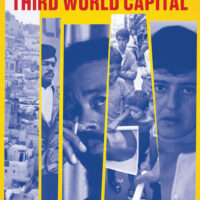
Book review: Elaine Mokhtefi – Algiers, Third World Capital: Freedom Fighters, Revolutionaries, Black Panthers

This article first appeared in the Morning Star on 23 August 2018.


ALGIERS, Third World Capital is a fascinating, vibrant, endearing and engaging memoir, providing fresh insight into some important episodes of the second half of the 20th century.

Elaine Mokhtefi, a white North American woman of Jewish heritage, became involved in politics at university, becoming an activist in the World Assembly of Youth (WAY), an organisation committed to global government and world peace. Moving to Paris in the 1950s, she was introduced to the Algerian liberation struggle via the emigre Algerian population in that city.

An interpreter and organiser for WAY and later the Algerian government in exile, she worked with and befriended some of the giants of the anti-colonial and anti-imperialist struggles, including Tanzanian president Julius Nyerere, Martinique-born Algerian revolutionary Frantz Fanon, African-American revolutionary Stokely Carmichael (Kwame Ture), ANC president Oliver Tambo and Swapo leader Sam Nujoma.

Deeply involved in the Algerian solidarity movement and committed to the project of building a new, socialist-oriented society on the ashes of the French colonial project, Mokhtefi went to live in Algiers soon after independence in 1962. Algeria in that period was a tremendously exciting place, a new state defined by its heroic and extraordinary struggle against a vicious French occupation.

The countries that had supported the war of resistance — Yugoslavia, Cuba, China, Egypt, Syria, Lebanon, the Soviet Union and others — were now Algeria’s main allies and sent advisers and experts to work with the new government. The liberation movements from Angola, Mozambique, South Africa, Vietnam and Palestine were welcomed with open arms. Today, Algeria’s diplomacy is more nuanced, but, in the early years after liberation from French colonialism, it was the centre of gravity of the anti-imperialist world.

One little-known manifestation of Algeria’s status as “Third World capital” is its support for progressive movements within the “First World,” most notably the black liberation struggle in the US.

Mokhtefi writes that “Algeria adopted an open-door policy of aid to the oppressed, an invitation to liberation and opposition movements and personalities from around the world.” Providing resources and recognition to the Black Panther Party, then at the zenith of its fame and activity, “flowed naturally from [Algeria’s] position as a Third World leader.”

Mokhtefi was closely involved in the establishment of the International Section of the Black Panther Party. Assigned to assist and interpret for Eldridge Cleaver from the moment of his arrival, she was for several years in almost daily contact with Cleaver, his then wife Kathleen, Don Cox and other leading activists.

As such, she is uniquely well-positioned to tell the little-known story of the Black Panthers in Algeria — how they operated, interacted with Algerian society and the government and particularly how they were affected by the 1971 split in the Black Panther Party.

The split remains a highly controversial topic. Cleaver’s version of events hasn’t been helped over the years by his fondness for self-serving exaggeration and deception, not to mention his political descent into Republican conservatism, and Mokhtefi isn’t under any illusions about him.

However, she gives a convincing description of what the split looked like from the Algiers Panthers’ point of view.

The story as it is usually told has Eldridge as an ultra-left militant, pushing for an escalation of the underground armed struggle, whereas party leader Huey Newton favoured a programme based on community activism.

In Mokhtefi’s telling, however, the split was based primarily on Newton’s increasingly erratic, violent and obsessive behaviour, with the FBI merrily adding fuel to the fire. Her version of events may anger some Panther veterans, but it’s a valid contribution to the historical record.

Mokhtefi also discusses some of the challenges that faced post-colonial Algeria, a country in which between 300,000 and 500,000, out of a population of nine million, had been killed during the war of liberation and where departing French soldiers and settlers burned villages and books. The adult literacy rate was under 10 per cent and there were not more than 500 university graduates.

The victorious National Liberation Front had to perform miracles in order to reverse the effects of colonialism, war and imposed underdevelopment.

The near-impossible nature of the problems at hand inevitably led to a certain amount of despondency and infighting, the most prominent example of which is the coup that brought Houari Boumediene to power and sent first president Ahmed Ben Bella to prison. Considering the effect on her own life — Mokhtefi ended up being deported as a result of her friendship with Ben Bella’s wife — she discusses the coup in surprisingly balanced and dispassionate terms, contextualising it within the intensely difficult and fraught situation Algeria was subjected to.

This exciting memoir is an important story and it’s told with skill, humour and humility.

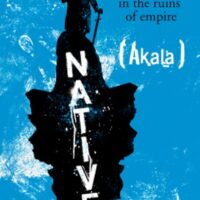
Book review: Akala – Natives

This article first appeared in the Morning Star on 24 May 2018.


Kingslee Daley — more often known as Akala — is earning a reputation as one of Britain’s most important voices.

On top of touring the world, releasing hip-hop albums, making documentaries for the BBC, campaigning on a range of issues, appearing on Question Time and running the Hip-hop Shakespeare Company, he has just published his first book.

Natives: Race and Class in the Ruins of Empire is at once a memoir, a detailed sociological investigation of racism and a whistle-stop tour of global politics from London to Beijing, with stops at Johannesburg, Kingston, Havana, Glasgow, New York, Hanoi, Bahia and Harare on the way.

We get an engaging and nuanced analysis of several themes, including the state of British culture, the historical function of racial superiority theories, the legacy of colonialism, the pernicious racism that can be found throughout our media and education system and the complex interplay between race and class.

The format is unusual — chapters tend to start with an episode from the author’s life and then go on to explore the sociological, cultural, political and economic relevance of that episode, making reference to a wide range of material, from academic papers to popular music. While this takes some getting used to, it helps to make the book accessible, as intellectual rigour is combined with human interest.

The overall ideological framework of the book is a pragmatic, socialist-oriented Pan-Africanism that seeks the liberation of all humanity from oppression and exploitation. At the same time, it highlights the shared problems faced by African communities worldwide in a global system of imperialism that is so inextricably linked with its origins in “the turning of Africa into a warren for the commercial hunting of black skins,” as Marx so memorably put it.

Akala demonstrates an impressive level of intellectual courage and doesn’t shy away from challenging deeply entrenched narratives, including the mainstream media’s coverage of China, Zimbabwe and Russia.

One important idea that emerges from Natives is that, in spite of Britain’s record of violence, slavery, genocide and colonialism, there is nonetheless a longstanding progressive trend that is “rooted in ideas of freedom, equality and democracy” and the author points out that while Britain was a leading proponent of war in Iraq, it was also the location of the world’s largest demonstration against that conflict. He also references the Chartists, the Tolpuddle Martyrs and the Suffragettes, along with the more recent examples of oppressed communities standing up for justice.

This broad progressive tradition is something that needs to be reclaimed and built upon. It provides a foundation on which we can build a redefined British culture, one that fights against injustice, that does away with racism, xenophobia and empire nostalgia, that celebrates diversity and that spurns “whiteness” — a solidarity of rich and poor based on the deception of race — in favour of the unity of the oppressed.

The historical moment we are living through demands nothing less. With the world moving in a multipolar direction, and with the rise of China in particular rendering theories of racial supremacy ever more absurd, the West is faced with a critical challenge. Will we cling on to our outmoded and anachronistic colonial-era ideology, fuelling ever-greater conflict and the threat of a re-emergent fascism and white nationalism, or will we embrace the future and seek to participate in the world as equal players on the basis of mutual respect and solidarity?

This question is being played out in an increasingly divergent political scene across Europe and the US. In Britain, while we’re witnessing the emergence of the Labour left, which is starting to establish a hegemonic position for anti-austerity, anti-war and anti-racist ideas, we’re also seeing a Tory government that has moved so far to the right that Ukip has basically lost its raison d’etre.

Natives constitutes a vital contribution to our understanding of modern society and poses a challenge for us all to participate in interpreting the past and moulding the future.

It deserves to be very widely read.